
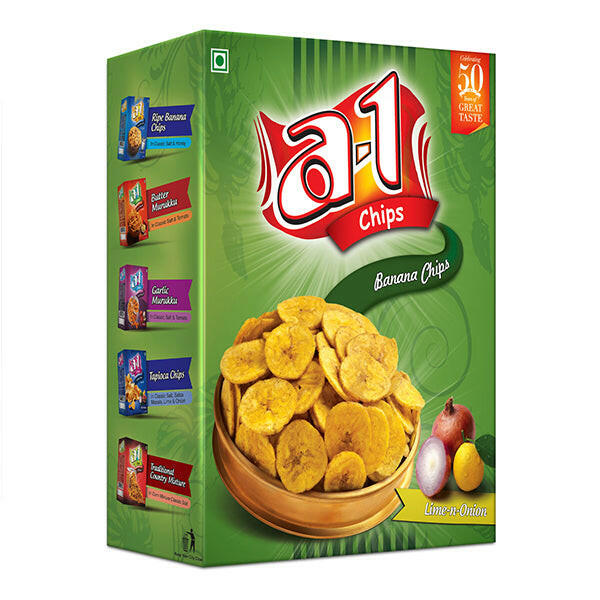
Pack format affects more than the appearance of a snack purchase. It changes how products are counted, stored, moved and served. A business should compare the actual available formats against its workflow before finalising quantities, rather than assuming a large order requires one particular type of pack.
Use the current A1 Chips catalogue for product references and Institution or Corporate Orders for a business discussion. This guide compares buyer workflows; it does not establish unlisted catering packs, custom packing or a format that has not been confirmed.
Begin with the point of use
State whether the snack will be sold as a sealed unit, handed to one recipient, opened for shared service or included in a gift assortment. Each use creates different counting and information tasks. A general phrase such as office snacks leaves those decisions unresolved.
If the same order serves more than one purpose, keep the requirements separate. A meeting handout and an ordinary canteen range may use the same product but need different allocations and review periods. Combine quantities only after the service-level calculations are clear.
Involve the staff who will receive and use the products. They can identify storage constraints, handling steps and difficulties with counting. A format that looks efficient in a purchasing comparison may create repeated work at the service point.
Compare sealed-unit distribution
When one sealed pack is handed to each person, the base calculation can use recipients multiplied by intended packs per recipient. The selected pack option still needs to fit the organisation's plan. Do not assume a particular size is available because a similar product offers it.
Keep the product information with the unit and use the current selected variant on the stock sheet. A sealed handout can simplify identification, but it does not establish dietary suitability or remove the need to check ingredients and allergen information where relevant.
If the desired size is not listed, ask which options can be considered. An institutional quantity does not automatically create a smaller portion pack or a larger service pack. Keep requested formats visibly open until the merchant confirms them.
Plan shared service as a separate workflow
Opening packs for bowls or another shared setup introduces additional internal tasks. The organisation needs to decide who opens, serves, identifies and manages remaining stock under the actual product directions and its own procedures. Those tasks should have named owners.
Use the planned portion and selected pack net quantity for arithmetic, while keeping the portion assumption separate from the product information. The pack weight does not create a universal serving recommendation. Record rounding to whole packs and the intended handling of any remainder.
Keep original product information accessible to the staff answering questions. Several unlabelled snacks placed together can disconnect the service from the actual products. The serving guide offers broader context, alongside the supplied pack directions.
Treat gift assortments as complete selections
A combo or kit has its own contents and selected options. The A1 Combo Pack Mini, for example, offers selectable halwa choices. Record the actual option rather than treating the combo title as a complete specification.
Do not assume two assortments contain identical products in different quantities. Compare their current lists individually. A kit may count sweet pieces and savoury packs using different units, so its total item count should not be read as the number of individually sealed retail packs.
If carrying dimensions or additional presentation matter, request the actual information. A photograph does not establish measurements or confirm a bag, card or custom wrapping. Keep any requested adaptation separate until its availability and scope have been clarified.
Match storage to the selected configuration
Check the space for the proposed quantity, including outer packaging where relevant. Ask for confirmed dimensions or carton configuration if those affect the decision. Do not calculate storage needs from a retail image or assume all outer units have the same size.
Arrange stock so exact products and relevant date information remain identifiable. A full cupboard is not necessarily a manageable one. Staff need access for counting, checking instructions and selecting stock appropriately without mixing variants or losing the link to the receiving record.
Follow the actual supplied storage directions. Do not apply one shelf-life period to every snack or treat opened service stock like sealed retail stock. Where the intended use raises an unanswered question, ask for clarification before approving the format.
Keep quantity units consistent
Use separate columns for product, selected pack option, pack net quantity, number of packs and any confirmed outer-unit conversion. This prevents a buyer from confusing a weight requirement with a count of individual units or complete gift assortments.
For illustration, a planned total of 2,000 grams divided by a selected 200-gram pack gives ten packs before any separately justified adjustment. The example only demonstrates arithmetic. It is not a serving recommendation or evidence that the desired product is supplied in that format.
If a selected pack changes, recalculate the requirement rather than retaining the old pack count. Revisit storage, service effort and any product-information review affected by the change. A different size is not merely a cosmetic edit to the specification.
Compare cost with handling scope
Use current selected prices or the actual business response on the same quantity basis. Keep product cost separate from any additional quoted components. A lower price per weight unit alone does not show which format best fits the organisation's service and storage constraints.
Record internal handling steps as part of the comparison. Receiving, counting, opening, allocating and managing remaining stock can require different effort across formats. Do not assign invented savings; use the organisation's observed workflow where available.
Ask about any commercial or packing question essential to the decision. Do not assume special pricing, mixed cases, custom presentation or a fixed supply frequency. A useful comparison has visible unknowns rather than guessed terms that make one option appear preferable.
Compare two workflows before deciding
Imagine one department handing sealed packs to registered attendees while another serves snacks during a meeting. The first needs a recipient-based unit count and a distribution record. The second needs a service quantity, a handling process and accessible product information. The same product family does not make those workflows identical.
Compare the formats actually available for each task, then ask which arrangement can be considered for the purchase. Record storage space, counting units and staff responsibilities alongside the product choice. If one format cannot be confirmed, revisit the workflow rather than assuming a custom alternative exists. The result should explain why the selected pack fits the operation, not merely which option looked larger in a photograph.
Retain the reasoning with the selected option so a later buyer can review the workflow if available formats or service requirements change.
Approve the format and preserve the record
Give the approver the exact product references, selected formats, quantities, service plan and unresolved questions. Mark which facts were confirmed and which remain requests. If the choice changes, update the receiving and service teams as well as procurement.
Use Packaged Snack Quality Checks to connect the format decision to information review and receipt. The right pack choice is the one that is actually available, accurately specified and practical for the intended workflow under the product's current instructions.


Leave a comment
This site is protected by hCaptcha and the hCaptcha Privacy Policy and Terms of Service apply.