

How coconut oil changes Kerala banana chip flavour and what to check on the ingredient label before buying A1 Chips wafers. This practical A1 Chips guide is intended to help shoppers choose the right product rather than make assumptions from a generic snack name.
Why the oil matters
Banana chips are shaped by more than the raw ingredient. Frying oil affects aroma and the overall sensory profile, while thickness and cooking method influence texture. Coconut-oil versions are associated with Kerala-style snacking and can have a characteristic aroma. Avoid inferring nutritional advantages from oil choice alone.
Read the current pack label
An online product title is a useful starting point but cannot replace the exact ingredient and allergen declaration. Check whether coconut oil is identified for the variant selected, and whether seasonings or other ingredients appear. Customers avoiding ingredients for medical, allergy or personal reasons should rely on current pack details or ask the merchant.
Thin wafers versus other cuts
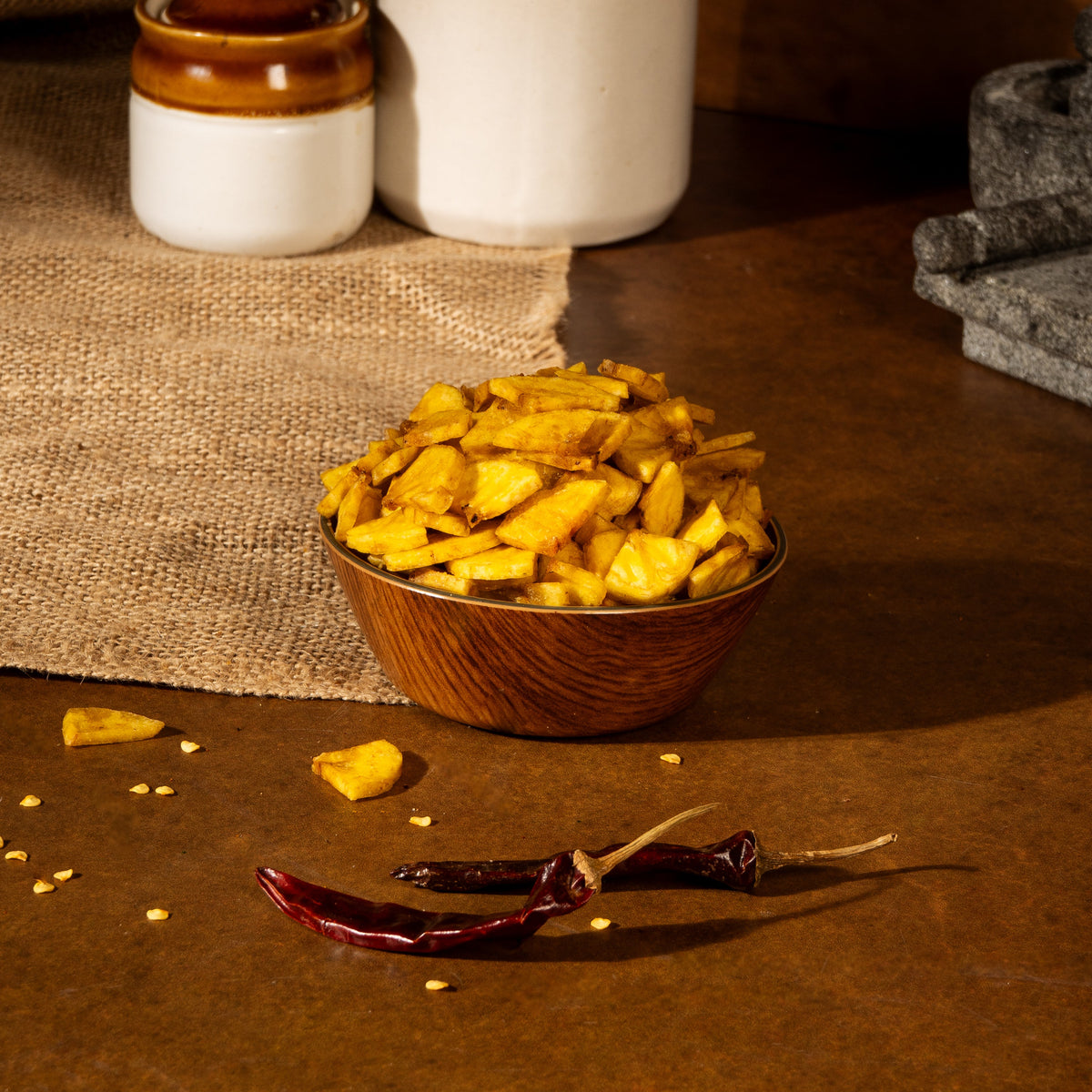
A1 Chips lists Ultra Thin Banana Wafers made in coconut oil and Banana Chips Crisps Thick. Thin wafers favour a delicate, fine crunch; thicker chips are more substantial. Comparing these two products is more useful than simply searching for the most popular banana chips, because the eating experience can differ significantly.
Choosing for a particular occasion
For an office snack or tea break, consider the preferred texture and pack size. For a tasting set, choose contrasting flavours or slice styles. For gifts, ensure that the recipient can eat the ingredients. The store's current product and checkout pages supply the final information on sizes, stock and delivery.
Relevant A1 Chips products and collection
Compare Ultra Thin Banana Wafers, Banana Chips Crisps Thick, Banana 4 Cut Salt, or browse the full Banana Chips. Product pages show current variants and prices; confirm delivery availability at checkout.
Common questions
Are all A1 Chips banana products coconut-oil fried?
Do not assume so. Confirm the ingredient information for the particular product and variant.
Does coconut oil guarantee a healthier chip?
No. A frying oil alone does not establish a product's overall nutritional properties. Read the nutrition information and consider the serving size.
Continue exploring banana chips
Kerala banana chips buying guide · Nendran chips explained · Coconut-oil chips explained. For a broader snack comparison, see Indian Chips and Crisps.
Why an oil claim deserves a closer look
Oil is not merely a technical ingredient in fried snacks: it can influence aroma and the way a familiar flavour presents itself. Coconut oil is especially associated with some Kerala-style preparations, so it is a meaningful buying preference for many customers. At the same time, the name of a traditional snack is not a reliable ingredient declaration. When selecting A1 Chips Ultra Thin Banana Wafers (Made in Coconut Oil), treat that product's own published ingredient information and packaging as the reference point.
Read the packet as a complete recipe
Start with the base ingredient and oil, then consider salt, flavourings, spice mixes and any additional declared ingredients. A named oil does not imply the absence of other ingredients, nor does it guarantee suitability for a particular dietary requirement. If a product is bought for someone with an allergy, the ingredient and allergen statements must be read in full, including any precautionary information. This matters especially when a gift contains multiple different snack products.
Compare thin wafers with other banana-chip styles
Very thin slices can give a delicate crisp that feels different from a thicker banana chip. That difference is about cut and eating experience, not a guarantee that one style is fresher, healthier or superior. To compare meaningfully, choose two packs with an obvious contrast—such as wafer-thin chips versus a thicker savoury chip—then consider how their seasoning and oil statements differ. Avoid comparisons based only on attractive packaging because two products can look similar while using different flavour profiles.
What about oil, nutrition and health claims?
Fried snacks should be described accurately rather than presented as automatically healthy because an ingredient sounds familiar or traditional. Calorie, fat and sodium figures depend on the actual formulation and serving size. If the nutritional information matters to your household, compare the declared values per 100g or per serving on the particular packets. Do not assume a statement about frying oil tells you the full nutrition profile.
Practical buying and storage checks
Choose the precise weight option on the product page. If you are comparing prices across sizes, calculate value using the selected pack weight rather than an older weight that may appear in the URL. When the pack arrives, check its seal, date markings and manufacturer storage directions. Once opened, limit exposure to moisture and air and follow the packet's stated handling instructions. For any complaint about freshness or packaging condition, contact customer support with the order details and photographs.
How to compare products claiming coconut oil
Start with the exact product, not a category assumption. A1 Chips has an Ultra Thin Banana Wafers listing that explicitly names coconut oil. That is more specific than an article saying Kerala chips are “usually made” with coconut oil. If you are comparing another brand or another A1 Chips variety, look for a comparable ingredient declaration. Taste impressions and historical recipes are useful background, but only product-specific information can tell you what the packet says it contains.
What an ingredient list can and cannot answer
An ingredient list helps identify the foods and seasonings used, but it does not automatically tell you how much oil was absorbed during frying, how crunchy a packet will be, or whether the snack is appropriate for a medical diet. For those decisions, use the nutrition table, applicable warnings and professional dietary advice where relevant. Avoid the common internet leap from “coconut oil” or “traditional” to “healthy,” “low cholesterol” or “suitable for everyone.” None of those claims follows simply from the oil name.
Oil versus seasoning: run two different comparisons
To compare the influence of oil, ideally compare products with similar base ingredients and seasoning. To compare flavour preferences, hold the cut or base ingredient reasonably similar and choose distinctly different seasonings. If you change oil, thickness, ripeness and spices all at once, the tasting can be enjoyable but it will not tell you which characteristic you preferred. A simple side-by-side tea-time sampling is often the best way to discover what you want to buy again.
Pack size and value without confusion
A product can contain two weights under one listing. Select the desired variant before reading price and availability, because a sold-out option may still appear alongside a purchasable one. Compare the actual grams selected to the price rather than relying on a weight embedded in the product URL. A smaller bag may be the best introduction to an unfamiliar wafer, while a larger bag could make sense for an established household favourite—provided it is currently available and will be consumed within the labelled storage period.
Thoughtful serving and gifting
Serve delicate wafers separately from strongly coated sweets or heavily seasoned mixtures so their particular character remains identifiable. For a gift, include an ingredient-conscious note directing the recipient to read each individual packet, not a blanket promise about the whole hamper. Mixed snack packs can contain products with different allergen and oil declarations. If the intended recipient has specific needs, seek confirmation before ordering rather than substituting a broadly worded online assurance.


Leave a comment
This site is protected by hCaptcha and the hCaptcha Privacy Policy and Terms of Service apply.