
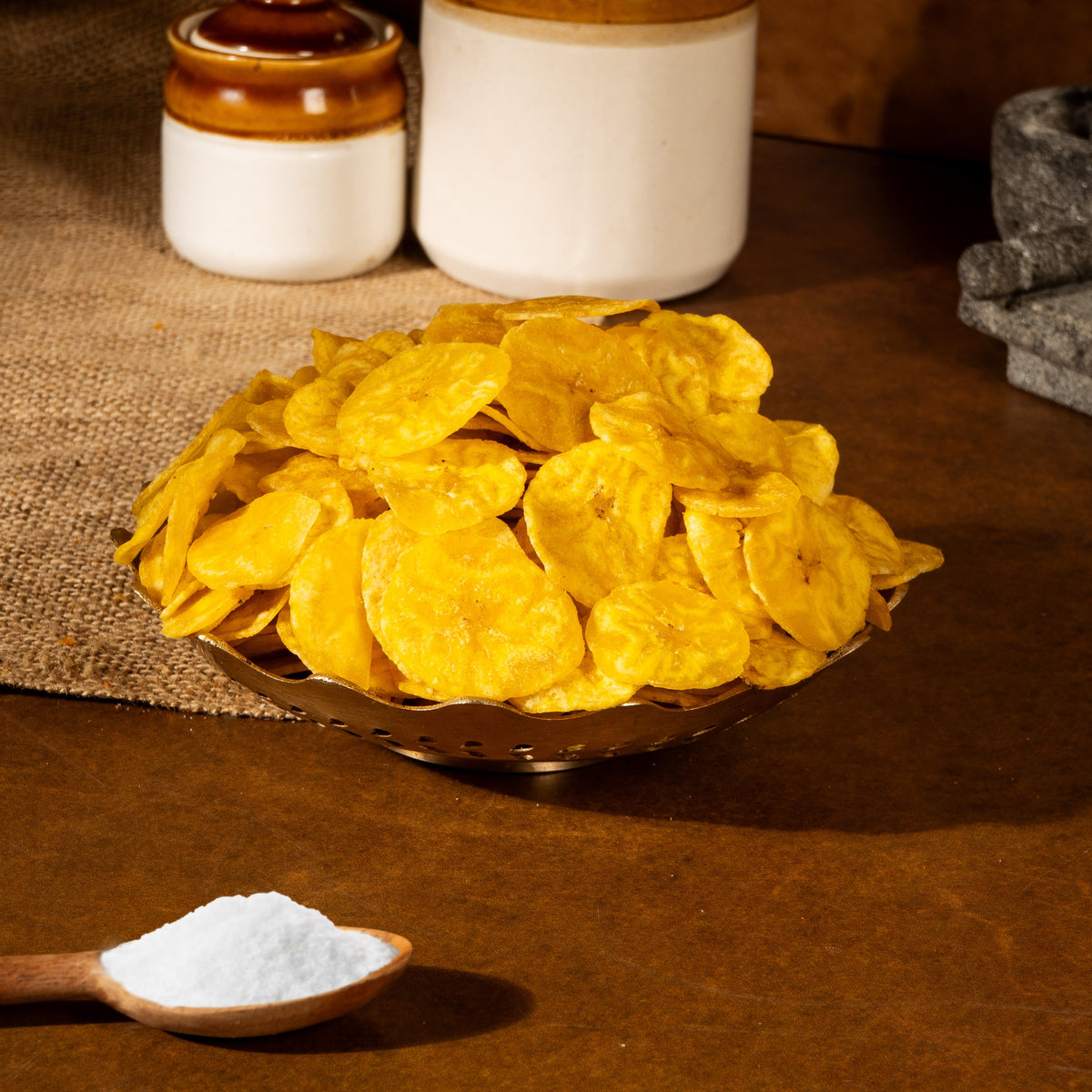
Kerala banana chips are often the starting point for anyone exploring traditional South Indian snacks. But there is no single banana-chip experience: the variety of banana, slice thickness, seasoning and frying oil all change the result. If you are shopping online, these details matter more than a broad description such as “crunchy chips.”
What makes Kerala-style banana chips distinctive?
Traditional Kerala-style versions are associated with firm plantain or Nendran banana slices, often fried in coconut oil. Some packets emphasize thin, delicate slices; others are thicker, with a stronger bite. Sweet jaggery-coated pieces offer a different experience from lightly salted savouries. The precise ingredients depend on the individual product, so check the packet information before purchasing.
Choose the style, not just the name
- Ultra-thin wafers: a lighter, finer crunch suited to people who enjoy crisp wafers rather than a substantial chip.
- Thick-cut chips: a firmer bite, often preferred as a standalone savoury snack.
- Jaggery-coated banana chips: a sweet alternative that balances banana character with a jaggery coating.
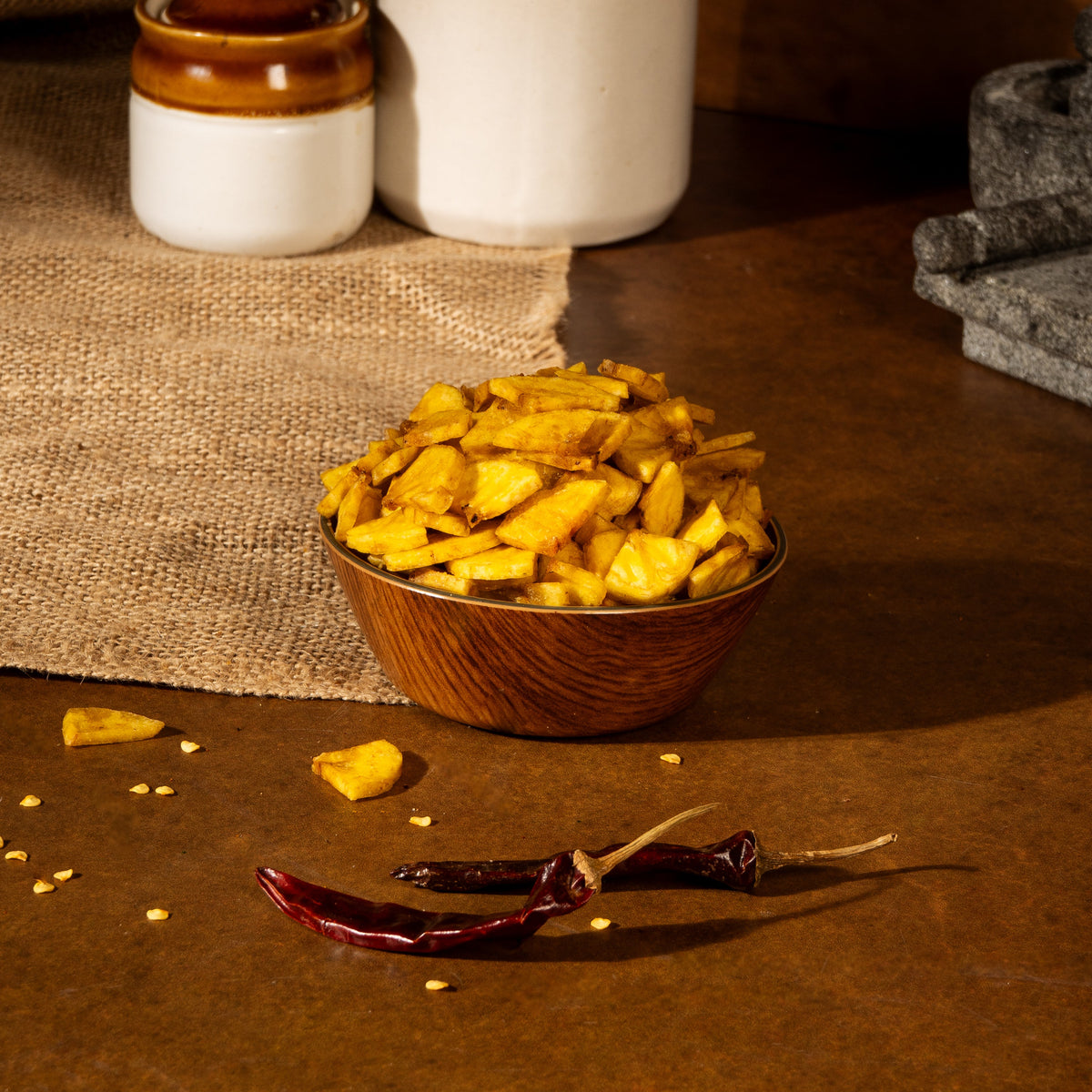
- Seasoned banana chips: variants such as Malabar Masala, lime-and-onion or chilli offer more assertive flavours.
A1 Chips offers multiple options in its Banana Chips collection. For specific examples, compare Ultra Thin Banana Wafers, Banana Chips Crisps Thick and Banana Jaggery Chips.
Does coconut oil matter?
Frying oil can influence aroma and flavour. If coconut oil is important to your purchase, select the specific variant whose verified ingredient information confirms it rather than assuming every product uses the same oil. A product can also contain additional seasoning ingredients. For allergy or dietary decisions, always read the current product label.
How to buy banana chips online confidently
- Start with your preferred flavour: salted, spiced or sweet.
- Check the pack weight and compare pack sizes rather than assuming the first listing is best value.
- Read the actual ingredient and allergen statements for the chosen variant.
- Confirm the selected variant is available for your delivery location at checkout.
- Consider a multi-product combo only if you want to try other savouries as well.
Begin with the eating experience you want
There are three surprisingly different reasons to reach for a banana chip. You might want a delicate wafer to eat with tea, a more substantial crisp that stands up to a long conversation, or a sweet-coated bite to finish a snack plate. Those preferences lead to different products even when every packet is described simply as banana chips. An effective comparison starts with texture and seasoning, then checks the actual pack rather than assuming that a traditional name tells the whole story.
For a first tasting, buy one familiar savoury style and one contrasting style instead of choosing three packets with nearly the same cut and flavour. The difference between a thin wafer and a thicker slice is often easier to appreciate side by side. A sweet jaggery-coated variant can make the comparison broader, but it belongs in a separate category from salted chips because the coating changes sweetness, texture and how people serve it.
A practical banana-chip comparison
| Style to consider | Likely eating experience | What to verify before buying |
|---|---|---|
| Thin wafers | A lighter, finer crisp | Weight option, frying-oil statement and selected-variant availability |
| Thicker slices | A firmer bite | Slice style, flavour and actual pack contents |
| Jaggery-coated pieces | Sweet, coated crunch | Ingredient list, coating information and sweetness preference |
| Masala or other seasoned varieties | More prominent seasoning | Named flavour, spices, allergens and the exact selected packet |
A table is only a starting point: photographs and descriptions cannot prove how crunchy a particular batch will be. If one detail makes or breaks a purchase—coconut oil, a seasoning ingredient, an allergen or a particular weight—use the product's current label and available variant details as the deciding evidence.
Putting together a Kerala-style snack platter
One enjoyable way to explore these snacks is to serve small portions separately before mixing them on a shared plate. Start with plain or lightly seasoned chips, then taste stronger seasonings, leaving sweet jaggery pieces until later. Separate bowls also help guests see the differences and avoid accidentally combining products with different ingredient declarations. For a mixed group, retain the original packaging nearby so anyone with dietary restrictions can check it.
Banana chips pair naturally with other savoury snack formats because the texture contrast is clearer than offering several very similar potato-chip flavours. A handful of murukku or mixture alongside a banana chip selection creates different shapes and eating experiences. The goal is variety rather than quantity, so make your decisions around guests, portion sizes and how long the packets will remain open.
Check the right details at checkout
Online product names sometimes contain a weight or historic packaging description even when a listing now offers several variants. Always select the intended variant on the page and confirm the displayed price, weight and availability. A larger option may be sold out while a smaller option remains purchasable. In that situation, a customer should see the difference explicitly, rather than assume that an available product page means every listed size can be ordered.
For a gift or an order going to someone else, confirm the recipient's delivery location and the current shipping options at checkout. Treat promotional bundles as separate products with their own current contents. These small checks prevent a much more frustrating experience than simply choosing the wrong flavour.
Three real-world ways to choose a banana-chip assortment
The familiar-flavour buyer: Someone who has enjoyed Kerala banana chips for years may not want the newest seasoning. A classic savoury choice and a preferred cut may matter more. For that buyer, the best guide points to the familiar style first and only then suggests a contrasting option.
The curious first-time buyer: Someone new to the category benefits from a simple comparison that isolates one difference at a time. A thin wafer and a thicker slice create a texture comparison; a salted chip and a jaggery-coated chip create a flavour comparison. Buying all four is unnecessary when two well-chosen options can teach the buyer what they enjoy.
The gift buyer: Someone purchasing for relatives may want a mix that includes a recognizable savoury, a sweet-coated product and one differently seasoned chip. But the recipient's tastes still come first. A gift that reflects their preferences feels more thoughtful than one assembled solely around the most eye-catching assortment.
A deeper look at texture, flavour and preparation
Texture is influenced by more than slice thickness. Differences in the raw ingredient, the way slices are cut and the final preparation also shape the experience. Without information about A1 Chips' specific process, it would be misleading to promise that one product is always more brittle or that one cut always contains less oil. A practical tasting can nevertheless distinguish your personal preference: note the first crunch, the mouthfeel after chewing and whether the seasoning is still noticeable afterward.
Flavour is equally multidimensional. Salt highlights a straightforward savoury quality; a chilli or masala blend adds another layer; jaggery changes the sweetness and surface experience. Coconut-oil aroma, where verified on the selected packet, can be another reason for a customer to choose one product over another. Treat these factors as separate questions instead of combining them into vague claims that one packet tastes “authentic” and another does not.
Suggested order of exploration
- Start with a reference: Pick a chip style you expect to enjoy, perhaps a lightly seasoned savoury.
- Change one characteristic: Compare a thinner or thicker cut, or select a different base ingredient.
- Explore a stronger flavour: Add a spice-forward or sweet-coated option if those flavours appeal.
- Notice who prefers what: For family orders, record which packet disappeared first and which was left over.
- Refine the next order: Replace what the household did not enjoy with a new, deliberate contrast.
This approach makes a product collection useful as a discovery tool rather than a wall of similar listings. It also shows why the smaller, focused comparison guides in this cluster exist: each explores one choice in detail while this main guide keeps the full category in view.
Frequently asked questions
Are thin banana wafers and thick banana chips the same?
Both belong to the banana-chip family, but the thickness changes the texture and eating experience. Compare the product photographs and descriptions before choosing.
Are banana chips always made with coconut oil?
No. Oil choices vary across manufacturers and products. The specific packet label is the reliable source for a purchase decision.
Where can I compare A1 Chips banana varieties?
Browse the A1 Chips Banana Chips collection for the current selection, sizes and availability. Use each product page for the most up-to-date buying details.
Explore next: This is the foundation of the Indian Snacks Online guide collection. Related guides on Nendran bananas, sweet jaggery chips, and thin-versus-thick textures connect these buying decisions to the store's individual products.
A more useful way to compare banana-chip packets
Imagine buying for three different people: one likes delicate salted wafers, another wants a strong savoury crunch, and a third reaches first for sweet snacks. A single “best banana chips” list cannot serve all three. A better comparison begins with the eater and the occasion. For a weekday tea break, the important questions may be texture and portion size; for an office snack bowl, variety and ingredient visibility matter more; for a festival gift, contrast between savoury and sweet formats may be the deciding factor.
On a product page, separate the name of the banana-chip family from the details of that actual packet. “Kerala-style,” “Nendran,” “thin,” “thick,” “masala,” and “jaggery” describe different things. The first two concern culinary tradition or base ingredient, thin and thick describe cut, and masala and jaggery signal flavour directions. A packet can combine several of these characteristics, but one label never confirms the others automatically.
How to plan a small tasting rather than overbuying
Start with two contrasting products. A delicately cut savoury wafer and a thicker savoury chip teach you more about texture than two similar thin wafers. If you want a third option, select a noticeably different seasoning or a sweet jaggery-coated style. Put each snack into a separate bowl, leave the packaging within reach, and taste the least heavily seasoned option first. After tasting, record which cut and flavour you actually liked; this is a better basis for a repeat order than assuming the most prominently advertised packet will suit everyone.
For a group, resist calculating quantities only from the number of guests. Are the snacks a brief welcome nibble, a substantial tea-time spread, or an accompaniment to a meal? Are there other sweets and savouries on the table? Smaller quantities of contrasting styles may provide a better experience than a large volume of one style, particularly when an unfamiliar flavour could be left unopened.
Choosing between everyday snacking and gifting
Everyday purchases tend to reward familiarity. If you already know that a particular cut and seasoning suits your household, a repeat order may be more sensible than experimenting with a large assortment. Gift purchases reverse that calculation: variety can demonstrate care, but only if the selected products are appropriate for the recipient. Ask about preferences, food allergies and whether the recipient enjoys sweet or spicy snacks. Avoid calling any packet “allergen-free,” “low-fat,” or “suitable for diabetics” unless the current official label supports that exact claim.
Banana chips can also be part of a wider Kerala-inspired selection with tapioca chips, jackfruit chips, murukku or a traditional sweet. Rather than claiming the combination is authentically traditional in every household, explain what each component contributes: a fruit-based crisp, a root-based crisp, a shaped savoury, or a sweet finish. That makes the recommendation understandable to someone new to South Indian snacks.
Reading sizes, offers and availability accurately
A product's URL can retain an older pack-size term even when the product now supports several selectable options. For the Ultra Thin Banana Wafers listing, the customer must choose between the displayed options and read the availability for the exact weight selected. In a recent store-data inspection, the 200g option was available while 500g was marked sold out; availability can change, so the live selector and checkout are authoritative at purchase time. A guide should never turn a historical price or stock snapshot into a permanent buying promise.
To compare pack value, divide the displayed selling price by the selected quantity—not by the name in an article, an image, or a URL. A 200g packet and a 250g packet cannot be compared fairly using only their total prices. Consider also whether the snack will be eaten promptly after opening and whether a larger size would lead to waste. The cheapest price per gram is not always the most practical purchase.
What a trustworthy banana-chip guide should not assume
Traditional food stories are useful context, but they cannot substitute for product declarations. Not every banana crisp uses the same variety, frying oil or seasoning. “Made in coconut oil” is a meaningful claim where stated for the particular item, but should not be copied across an entire product collection. Nor should a product be described as nutritionally better simply because it contains plantain or jaggery. If ingredients, nutrients, origin or allergens are decision-critical, read the current packaging and contact A1 Chips for clarification.
For delivery, distinguish what an article can help with from what only checkout can confirm. A guide can explain how to compare options and prepare an order; checkout determines the actual shipping methods and charges for the address, selected products and weight. Save your preferred variants, then review the entire order before paying.
Explore this question in more detail: Jaggery banana chips: sweet Kerala snack buying guide.
Explore other A1 Chips knowledge clusters
This guide is part of Indian Snacks Online by A1 Chips. For a different buying question, continue with Tapioca and jackfruit chips guide, Traditional Indian sweets guide, Indian snack gifts and combo guide. Each guide connects verified snack categories to the brand's actual shopping pages.
Regional food vocabulary and serving ideas
Kerala-style banana-chip terminology connects to the broader language of kappa, Nendran and other traditional snacks. If you are choosing foods to share, serving format matters as much as ingredient vocabulary.


Leave a comment
This site is protected by hCaptcha and the hCaptcha Privacy Policy and Terms of Service apply.