
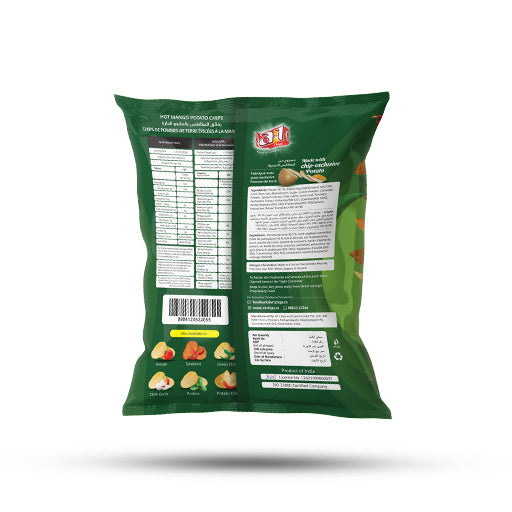
Export packaging questions should distinguish the sealed snack pack, any gift or assortment presentation, and the outer shipping carton. These layers serve different purposes. A photograph of an attractive retail pack does not establish carton strength, shipment dimensions, destination labels or a special packing service.
For A1 Chips, use the Export page to introduce the commercial enquiry; it invites registered exporters to register. Describe the products and destination before asking about packaging. The answers must relate to the exact proposed transaction, not to a general assumption about all Indian snacks.
Identify the pack the customer will receive
Begin with product name and selected pack option. Include the current product URL and specify whether the buyer intends to sell sealed units or use another confirmed format. If a format is only a preference, label it as a request rather than writing it into the brief as an available product.
For example, a listed Hand Murukku pack is a retail product reference. It does not establish an unlisted catering pack or a different label version. Ask which configurations can actually be considered before building a cost or storage comparison around them.
Keep the selected pack identity consistent across quotation, label review and receiving records. A change in size or variant can change the information the buyer needs. Do not allow a spreadsheet to retain an old description while the commercial conversation moves to a different item.
Ask what the outer unit contains
Request the confirmed number of retail packs per outer carton for the proposed configuration. Clarify whether cartons would contain one product or a specified mix. A mixed assortment should have an understandable packing list so the receiving team can reconcile quantities without opening every retail pack.
Distinguish a proposed carton count from a confirmed one. The buyer may initially estimate the number needed, but final planning should use the actual configuration supplied for the order. Do not derive case quantities from a product image or from another merchant's packing practice.
If partial or mixed cartons are important, ask whether they can be discussed. Do not assume the team offers them. A clear answer early in the enquiry prevents the buyer from approving an assortment that cannot be supplied in the format used in its calculations.
Separate dimensions and weights
Product net quantity describes the food quantity in the selected pack. Outer dimensions and gross weight describe a different layer of the proposed shipment. Ask for the values needed by your appointed logistics adviser and identify whether they are provisional or confirmed.
An illustrative record might have columns for product, packs per carton, carton count, outer measurements and gross weight. Leave unknown cells open. A visible blank is more useful than a guessed number that later becomes the basis for transport planning or storage allocation.
Recheck the record when the product mix changes. Replacing one snack or changing pack counts can affect the outer configuration. Keep the date and revision of any supplied packing information so the buyer, exporter and logistics adviser are working from the same version.
Prepare label questions product by product
Obtain the current label information for each exact item being considered. The destination review should be handled by the importer and suitably qualified advisers using current requirements. Ask them to identify what information is needed rather than relying on a generic checklist as proof of compliance.
If a particular marking or document is required for the proposed transaction, ask who would provide it and whether it is available. Do not state that A1 Chips offers a destination-specific label, certificate or adaptation until it has been confirmed for that product and order.
When reviewing images of labels, ensure they are readable and belong to the selected variant. A cropped photograph can hide important information. Ask for clarification where the pack and the written specification appear inconsistent, and resolve the difference before the final purchase decision.
Use actual storage and date instructions
Different products can carry different pack directions and date markings. A buyer should not apply one storage period or shelf-life claim to the entire shipment. Review the information for every item against the intended route, receiving arrangements and sales period.
If the buyer has a requirement about remaining labelled life at receipt, state it precisely as a question for discussion. Do not assume it is accepted. Ask how the relevant date information can be confirmed for the proposed supply and keep the response with the product record.
Avoid treating a package as proof of performance in every transport condition. Any concerns about handling or the proposed route should be assessed by the responsible parties. This guide does not guarantee resistance to crushing, moisture, heat or a particular transit duration.
Treat added packing as a separate request
Some buyers may want additional outer protection, a particular presentation or a packing arrangement that fits their receiving operation. Describe the need and its reason. Ask whether it can be accommodated and what information is required to evaluate it.
Do not turn a request into a published service claim. A retail gift assortment does not establish personalised wrapping, custom branding or export repacking. Any agreed adaptation needs its own scope, responsibilities and commercial confirmation before it becomes part of the order.
If the buyer intends to perform additional packing elsewhere, identify that stage and the party responsible. Ensure the original product identification and relevant information remain available to the people assessing the final sale format. Take appropriate professional advice where that activity creates additional requirements.
Plan identification at handover
Ask how the proposed cartons would be identified against the packing list. Receiving staff need to distinguish products, quantities and any different batches where relevant. Clear references reduce the chance that a mixed shipment is counted as a single undifferentiated stock line.
Agree internally what records the receiving team will retain: carton counts, observed outer condition, selected product identities and relevant label details. If an issue arises, a factual record is more useful than a general statement that the shipment looked wrong.
Keep reporting arrangements tied to the actual order terms. This preparation does not create a return right, replacement promise or new claim procedure. Ask the responsible party how concerns should be raised and preserve the evidence requested for that process.
Resolve discrepancies before approval
If two documents show different pack counts or dimensions, identify both versions and ask which applies to the proposed order. Do not silently choose the more convenient figure. Tell every affected reviewer when the answer changes the packing record. This prevents an outdated carton assumption from remaining in a transport estimate or storage plan after the product team has corrected it. Keep the clarified record with its date and the person who supplied the information.
Send questions in a reviewable order
Organise the enquiry around retail pack identity, outer configuration, measurements, current label information and outstanding destination-review requests. State which questions are essential to the buying decision and which describe optional preferences. A concise list makes unresolved dependencies easier to see.
Use Banana Chips, Murukkus or other current collections for product discovery, then attach exact references. The export preparation guide explains the wider process. Packaging information becomes useful when it is current, product-specific and connected to the parties responsible for the actual transaction.



Leave a comment
This site is protected by hCaptcha and the hCaptcha Privacy Policy and Terms of Service apply.