

Choosing categories for a commercial snack export enquiry is a shortlisting exercise. It helps the buyer explain the intended customer and the products worth investigating. It does not establish that a category, ingredient or pack is suitable for a destination. That assessment needs the exact product information and the responsible destination review.
The A1 Chips Export page invites registered exporters to enquire. Begin with a focused product sheet and a clear destination. Use the public catalogue to identify items, then confirm current availability, pack options and information needed for the proposed transaction with the team.
Begin with the overseas shopper
Describe who would buy the snacks and where. An established Indian grocery store, a specialist food counter and a hospitality buyer have different selection tasks. Explain the actual channel rather than relying on the broad assumption that everyone overseas wants the same assortment.
Distinguish familiar products from discovery products. Customers who already ask for a named snack may need an exact match, while a tasting-oriented range needs clearer category explanations. Record the reason for each proposed item so a later substitution can be evaluated against its intended role.
If customer evidence is limited, say so. A proposed market test can still be useful, but forecast quantities should not be presented as established sales. Keep initial demand assumptions separate from actual orders or aggregate sales records supplied by the buyer's own outlets.
Compare banana snack varieties accurately
Ultra Thin Banana Wafers made in coconut oil, Banana Jaggery Chips and Ripe Banana Fruit Chips are distinct product references. Do not collapse them into one line called banana chips and leave the flavour or pack decision unresolved.
Use the current page and pack information to identify the selected variant. The product title can establish a stated characteristic, but it does not replace the ingredient list or destination assessment. Avoid health, dietary or allergen claims inferred from the use of coconut oil or from a familiar product name.
For category context, consult the Kerala banana chips variety guide. Then return to the exact product record. A category explanation helps discovery; the commercial specification must still identify the actual item the buyer wants assessed.
Keep jackfruit and tapioca separate
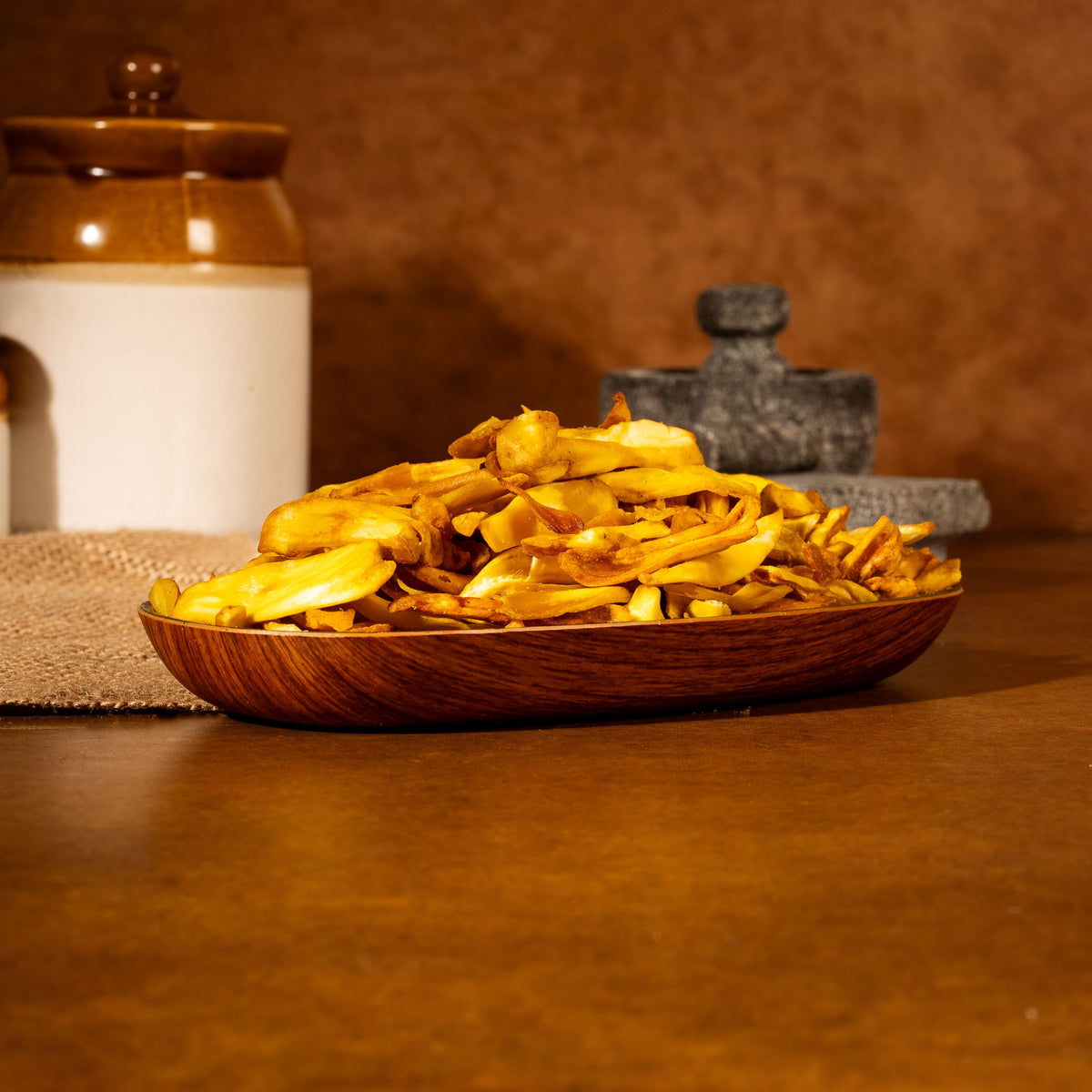
Jackfruit Chips provide a different product reference from the Tapioca Chips collection. A mixed crisps shortlist can include both for discussion, but their identities, selected packs and available information should remain separate. A shared crunchy texture does not make them interchangeable.
If the buyer wants a tapioca variant with a particular stated seasoning, identify that variant explicitly. Do not assume every item in the collection has the same flavour, cut or pack size. Where the page is unclear, ask a precise question rather than choosing a description from another product.
Explain whether these categories are intended as familiar staples or as trial additions. That decision can influence the proposed quantities and customer information needed at the destination. It should not be treated as evidence that a product will sell quickly or be approved for that route.
Explore traditional savouries by product family
The Murukkus and Mixtures collections offer useful starting points for a savoury selection. Compare exact items such as Hand Murukku, Thattai and Country Mixture. Record product names as shown rather than assigning one generic description.
Shape and product family can help customers understand the range, but they do not establish complete ingredients. A buyer should obtain current label information for each proposed item. Do not assume that all savouries share an allergen statement, storage direction or labelled period.
Keep product descriptions understandable to the intended customer. Regional names may need a short factual explanation, while the original name remains visible for identification. Avoid replacing a precise name with an attractive but vague phrase that makes it harder to match the item to documents and cartons.
Assess sweets as their own purchasing decision
Halwas, Mysore Pak and Peanuts and Sesame Chikkies represent different sweet categories. Their inclusion in the retail store does not mean they have the same packing, handling requirements or suitability for a proposed overseas transaction.
Request the exact product facts needed for the destination review and the buyer's intended sales period. Do not use a generic claim about Indian sweets to fill missing information. If a sweet is essential to the proposed assortment, mark its outstanding questions clearly before approving the mix.
Avoid treating a sweet-savoury balance as a fixed formula. The appropriate balance depends on the intended customer, buying occasion and the specific products that can be confirmed. It is better to submit a smaller coherent shortlist than a broad assortment containing unresolved items.
Record constraints beside preferences
Use separate columns for preferred product, selected variant, quantity, intended role and information required. Add a column for whether substitution may be considered. A buyer can then distinguish a non-negotiable customer request from an optional trial product without relying on memory.
If a product becomes unavailable, compare the proposed alternative against the original purpose and obtain its own current information. Similar category membership is not enough. A different pack, ingredient list or product identity can require the buyer and its advisers to review the choice again.
Keep availability separate from destination suitability. A product can be available in the store while still needing assessment for the proposed transaction. Conversely, an earlier review does not reserve stock or establish current supply. Both questions need current answers before the order is finalised.
Use a shortlist review exercise
Imagine a buyer considering six products for a specialist shop. Two are established customer requests, two provide a different savoury family and two are optional sweet trials. Mark those roles explicitly. If the enquiry response requires the range to be narrowed, the buyer can preserve the core purpose instead of removing products arbitrarily.
Now check each line for missing facts. One may lack a selected pack option; another may have an unreadable label image; a third may be listed online but still need current supply confirmation. These are different gaps and should have different questions. A single “approved” column would hide that distinction.
Finally, ask whether the buyer has enough information to describe each snack accurately to its own customers. Where regional names are unfamiliar, a short factual category explanation can help. It must remain consistent with the product identity and should not introduce unsupported ingredient, dietary or health claims. Keep discovery copy separate from the exact specification used for purchasing.
Review the proposed display language alongside the shortlist. Accurate category names help shoppers find the product again, while vague descriptions can disconnect the shelf from the purchasing record. Keep the original product name visible and verify any additional description against the current page and label before using it in customer material.
Submit a manageable enquiry shortlist
Attach exact URLs and clearly labelled quantities to the Export enquiry. State the destination, intended retail or service channel and the organisation's role. Ask which shortlisted products can be considered and what further information can be supplied for review.
Use the commercial export preparation guide to organise responsibilities and timing. The strongest category shortlist connects an identifiable customer need to a specific product while keeping every unconfirmed requirement visible until the responsible parties resolve it.

Leave a comment
This site is protected by hCaptcha and the hCaptcha Privacy Policy and Terms of Service apply.