
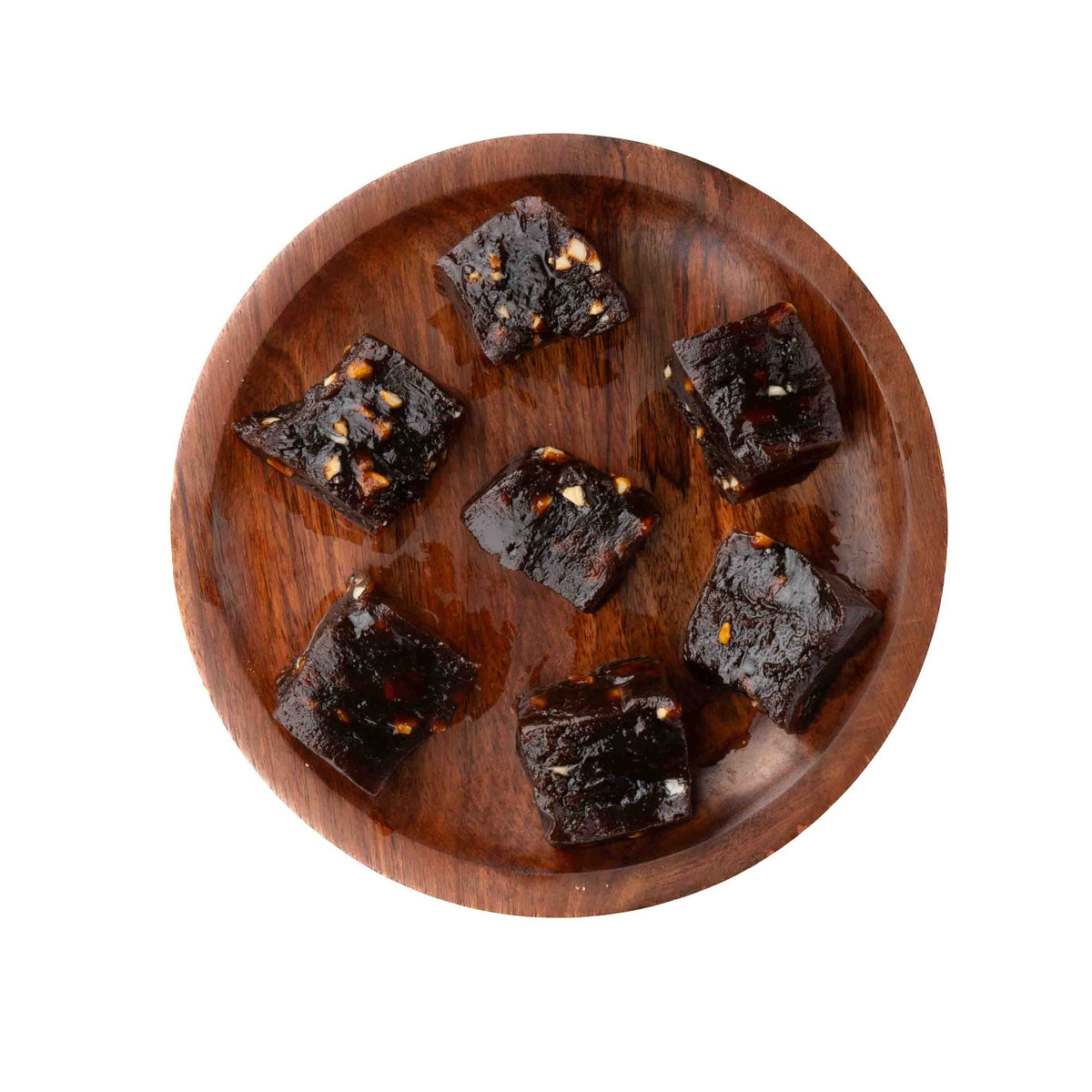
Learn about Kerala black jaggery halwa, the characteristics that distinguish it from other sweets and how to select an A1 Chips pack. This A1 Chips guide explains how the products differ so buyers can choose based on ingredients, texture and occasion.
A recognizable Kerala sweet style
Kerala black halwa is known for a dark appearance and distinctive rich sweet profile. Jaggery-based versions belong to a long-standing Kerala sweet tradition, but recipes differ from producer to producer. A1 Chips lists a Kerala Black Jaggery Halwa product that should be compared using its current ingredients rather than general assumptions.
How it differs from wheat halwa
Black jaggery halwa and traditional wheat halwa can have different sweetness profiles, ingredients and textures. Both fall within the broad halwa category, but a shopper wanting a specific Kerala-style sweet should not assume any halwa packet is equivalent. The official store provides separate product listings for the two.
Texture and serving expectations
Halwa differs from brittle sweets such as chikki and from dry, crisp snacks such as varkey. When buying online, photos can help illustrate the product but cannot replace pack dimensions, storage instructions or the current ingredient statement. If a sweet is intended as a gift, these practical details matter as much as the name.
Purchase confidently
Check the labelled pack weight and selected variant. Match the delivery timing to the occasion and follow the storage instructions after receipt. For an assorted gift, a contrasting crisp snack can be useful, but avoid bundling perishable items without verifying their individual handling requirements.
Browse related A1 Chips sweets
Kerala Black Jaggery Halwa; Traditional Wheat Halwa; Kerala Orange Halwa. Explore the Halwas collection for current selections and availability.
What does “black jaggery” tell a buyer?
Black jaggery in the name of a halwa points toward a traditional sweetening direction, but it is not a complete recipe. The texture, sweetness and flavour of the finished sweet depend on its broader ingredients and preparation. Customers should look at the actual product description and packet information before assuming that every Kerala jaggery halwa uses identical ingredients or has the same consistency.
Compare texture before comparing names
People who enjoy halwa often care as much about texture as sweetness. A yielding confectionery experience feels very different from the brittle bite of a nut or seed chikki. If you are choosing a mixed sweet assortment, that contrast can be interesting. If you know the recipient strongly prefers halwa, offering different halwa styles may be more appropriate. The key is to choose deliberately rather than treat every item under “traditional sweets” as interchangeable.
Jaggery is not a shortcut to a health claim
A traditional jaggery-based sweet remains a sweet food. Neither its name nor its traditional association supports claims that it is diabetic-friendly, low-sugar or inherently healthier than another confection. If nutrition is relevant, compare the actual declared information on the packet and seek appropriate professional advice for a medically restricted diet. This guide should describe a sweet's style and shopping considerations, not imply therapeutic benefits.
Serving ideas and care with handling
For a family get-together, offer small portions with a separate savoury bowl so guests can decide the balance between the two. Keep labels accessible for allergens and ingredients, especially where sweets and savouries are served together. Packaging matters for transport because a softer sweet can behave differently from a firm crisp or brittle. Follow the manufacturer's stated storage directions after opening; do not assume every halwa has an identical shelf life.
A confident online purchase
Verify the selected weight and current price rather than judging value from a product photograph. If the sweet is intended for a celebration, confirm delivery eligibility at checkout and avoid assuming the dispatch date is the delivery date. A1 Chips may have several traditional sweets available; compare the exact product descriptions, including any flavour variations, before building a box. A helpful online guide should let the recipient's preferences shape the order.
What does black jaggery contribute to the story?
Black jaggery is a traditional sweetening ingredient associated with some Kerala sweets, and its use can give a halwa a different flavour direction from a product sweetened or flavoured another way. But “black jaggery halwa” is still a commercial product that should be understood through its actual label. The name alone does not establish the precise recipe, amount of jaggery or manufacturing method. It also does not turn a confection into a low-sugar health food.
Compare halwa varieties by specific ingredients
A1 Chips offers Kerala Black Jaggery Halwa and Traditional Wheat Halwa as separate listings. That distinction is more informative than treating all halwa as a single sweet. Compare their declared ingredients, flavour descriptions, current pack weights and storage needs. If you are deciding between them for a first order, consider whether the recipient wants to explore a named jaggery preparation or prefers an already familiar wheat-based sweet. The two may offer different tastes and textures, which should be described cautiously unless verified from current product information.
Serving and sharing
Halwa fits naturally into many family dessert settings, but serving portions and accompaniments should match the rest of the menu. If there is already payasam or another rich dessert, a smaller halwa selection may be enough. For a tea-time tasting, compare one halwa with a brittle snack such as chikki; the contrast in format can be more memorable than sampling several near-identical halwas. Keep the sweets apart so their individual flavours remain clear.
Ingredient and allergy checks
Traditional sweets can contain grains, dairy, nuts or other ingredients, depending on the recipe. A black jaggery name does not prove the absence of wheat or milk. Anyone buying for another person should check the exact declared allergens and precautionary information. Avoid claims that jaggery is diabetic-friendly or that a named traditional recipe provides a medical benefit; those assertions require evidence beyond an ingredient name.
Purchasing and storage
Check the currently selected weight, price and stock status. Verify any special handling instructions at the point of purchase, particularly when sending the sweet as a gift or taking it on a trip. Follow the date and storage information printed on the actual package; not all halwa products have the same shelf life. The best guide combines respect for the sweet's cultural place with accurate instructions for a real purchase today.
Frequently asked questions
Is black halwa the same as wheat halwa?
Not necessarily. They can use different recipes and have different appearances, flavours and textures.
Can Kerala black halwa be part of a gift?
It can be considered for a gift when the pack is available, appropriate for the recipient and can be delivered and stored correctly.
Related traditional sweets guides
traditional indian sweets kerala halwa chikki guide · peanut vs sesame chikki buying guide · mysore pak south indian sweets guide. Read the current ingredient, allergen and storage information on each product page before ordering.


Leave a comment
This site is protected by hCaptcha and the hCaptcha Privacy Policy and Terms of Service apply.