
The occasion gives a snack gift its purpose, but the right assortment still depends on the recipient and the way it will be handed over. A festival gift for a business team, an employee milestone and a conference take-home pack can all use sweet and savoury products while needing different planning decisions.
This guide focuses on those decisions. Use the current A1 Chips Combos and Diwali Kits collections to investigate actual products. For a business quantity or an institutional requirement, use Corporate Orders or Institution. A published gift product is not confirmation of personalised wrapping, custom branding, trade pricing or a delivery promise.
Begin with the recipient and handover
State who will receive the gift and whether it is intended for one person or for a household or team to share. Those are different selection tasks. A gift handed to an employee at work also has a different practical journey from a pack distributed at the end of an event or sent to a separate destination.
Keep recipient needs distinct from the sender's presentation preference. A large number of product varieties may look appealing to the buyer, but the recipient still needs to recognise the products and have access to their information. Choose a manageable assortment with an understandable purpose rather than treating the longest product list as automatically best.
For business gifts, use an approved recipient list and a clear internal process. Avoid sending unnecessary personal data during the first product enquiry. An aggregate count and the proposed handover method can establish the initial requirement while address or individual recipient details are handled later through the appropriate process.
Compare a focused combo with a broad assortment
The current A1 Combo Pack Mini page lists Ultra-Thin Banana Wafers, halwa, SPL Potato Chips (Chilly), Finger Tapioca Chilly, Sesame Ribbon Pakoda and Country Mixture. The product also offers selectable halwa options. Check the current option and contents before ordering, rather than leaving the halwa selection to assumption.
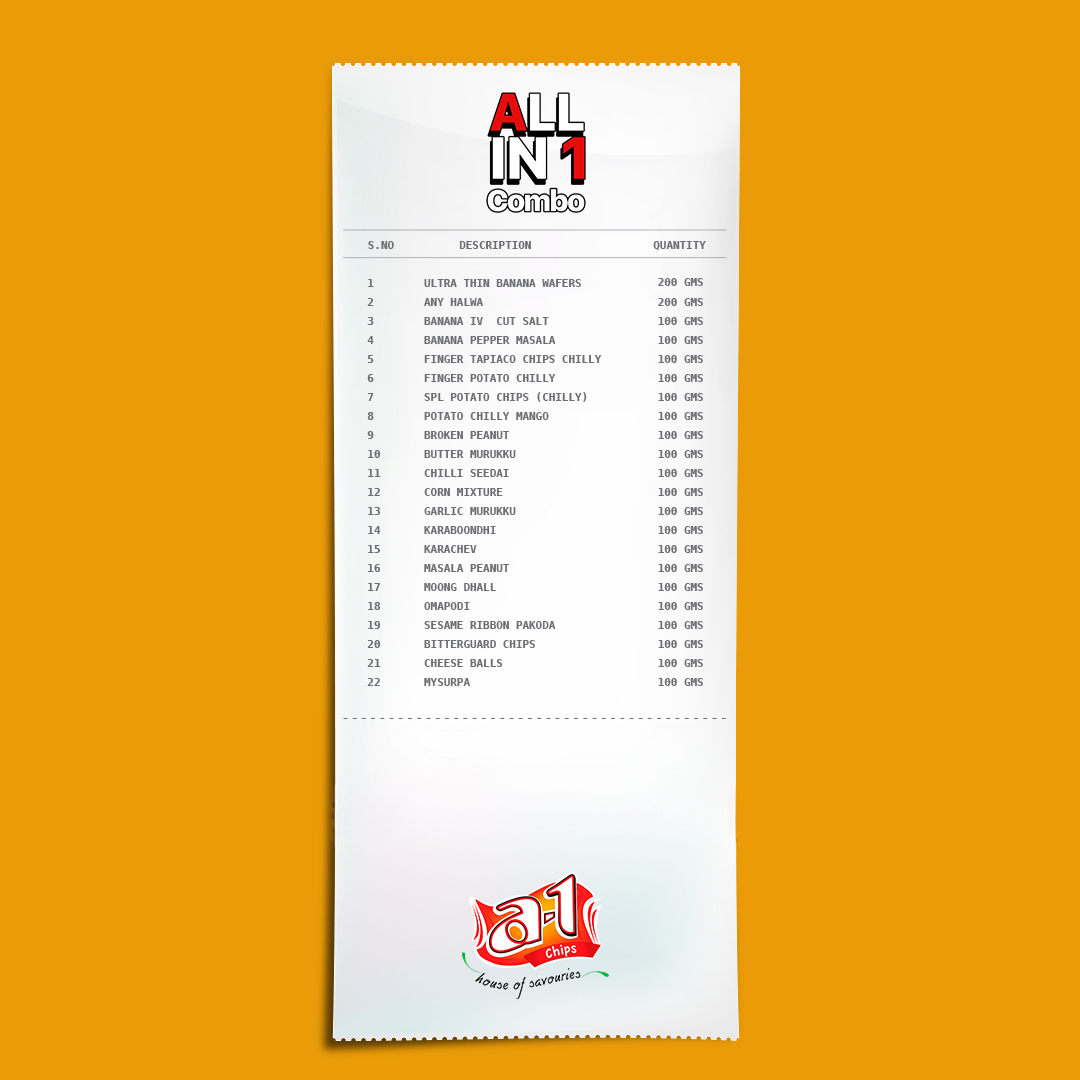
The A1 All in One Combo page describes a broader 22-snack assortment. Its list includes banana wafers, halwa, several savouries, murukku products, mixtures and Mysurpa. A wider list may be useful when variety is the objective, but it also means more product information and preferences to consider.
The Best of South Indian Snacks Combo is a more focused pairing: Country Mixture (200g) and Kerala Black Jaggery Halwa (200g). It provides a clear savoury-and-sweet comparison with the wider assortments. Do not infer a fixed number of recipients or servings from those weights.
Understand seasonal kits as exact products
Seasonal names should lead to a current product check. The Celebration Kit 2026 is described as a 450GM assortment. Its listed contents are Soan Papdi (2 pieces), Pista Mithai (4 pieces), Choco Mithai (4 pieces), Kaju Kathli (2 pieces), Kajur Burphy (1 piece), Hand Murukku (one 100gm pack) and Kalyana Mixture (one 100gm pack).
The Elite Kit 2026 is also described as a 450GM assortment, with a different list: Soan Papdi (2 pieces), Pista Mithai (4 pieces), Choco Mithai (3 pieces), Kaju Mango Dry Fruit Kathli (1 piece), Dates Laddu (1 piece), Sesame Pakkoda (one 100gm pack) and Kara Boondhi (one 100gm pack).
These descriptions distinguish the kits; equal stated weight does not make their contents identical. The pages mix counts of sweet pieces with counts of savoury packs, so do not interpret a total item count as the number of individually sealed retail packs. Confirm current contents, presentation, availability and any details essential to the gift before purchase.
Match a festival gift to the actual occasion
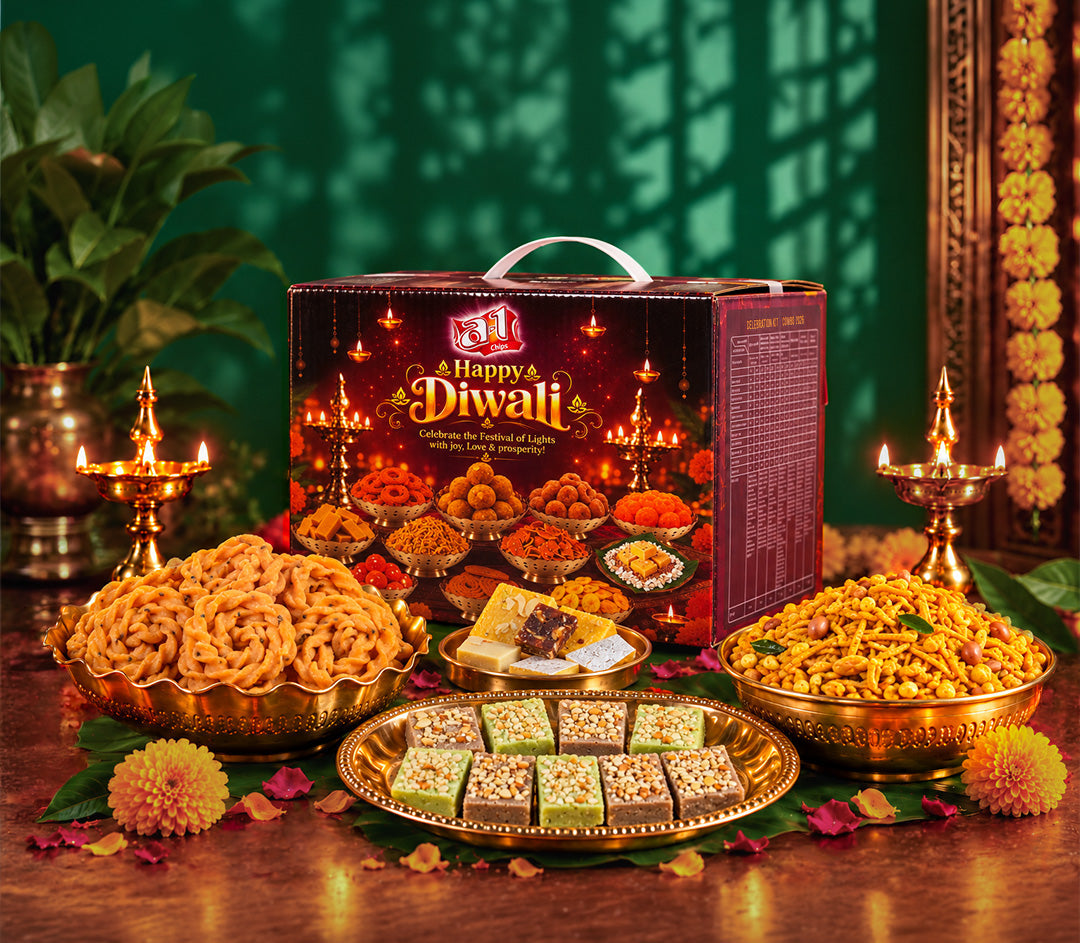
For a festival, decide whether a seasonally presented kit or a more general assortment fits the intended handover. A product photographed with Diwali presentation may be appropriate for that festival but should not be assumed to carry neutral presentation for every occasion. Check the actual product and ask about any presentation requirement.
Keep product selection separate from timing. Finding a suitable kit does not establish supply for the required business quantity or arrival before the event. State the desired receiving date and ask about feasibility. Do not transfer a previous season's price, availability or delivery experience to a new order.
The festival snack gift guide provides broader consumer selection context. For a team purchase, add the recipient count, approval schedule, receiving location and internal distribution plan. Those operational details turn an attractive product into a reviewable business brief.
Plan employee milestone gifts consistently
Milestones can include a joining occasion, a work anniversary, a project completion or another event recognised by the organisation. Define the policy before choosing the assortment. Consistent selection criteria help avoid repeated last-minute decisions based on whoever happens to be placing the order.
Choose whether the gift is intended for the employee alone or for sharing outside work. Then compare exact current products against that intention and the approved budget. Do not assume that every recipient wants the same flavour profile or that a familiar snack family resolves ingredient or allergen questions.
If an alternative is needed, define the review process rather than promising that any substitution is equivalent. A different combo may have a different contents list, pack arrangement or product information. Keep the approved choice and any alternative identifiable so receiving and handover staff can distribute the correct assortment.
Separate event gifts from refreshments
Snacks consumed during a business event and gifts taken home afterwards are separate requirements. The first depends on the break-time service plan; the second depends on eligible recipients and the handover process. Combining them too early can lead to the same attendees or stock being counted twice.
For a take-home gift, consider how the recipient will collect and carry it. Ask for dimensions where these affect the event's plan. A product photo is not a reliable measurement and does not establish that an additional carry bag or outer presentation is included.
Keep gifts for speakers, staff and attendees distinguishable if the event uses different assortments. Give the distribution team one current list and a count for each service point. This is an internal event responsibility; do not assume that the merchant provides on-site allocation or distribution.
Review product information before making promises
Check the exact product pages and pack information for the selected assortment. Ingredients, allergen statements, date markings and storage instructions can differ across the products inside a combo. A sweet-and-savoury description explains the broad selection, not suitability for every recipient.
If the organisation needs a particular assurance, obtain the relevant information and use its responsible review process. Do not describe a combo as allergen-free, suitable for a medical need or compatible with a dietary restriction based only on its name. Keep unanswered questions open rather than adding an unsupported assurance to a gift message.
When a variant changes, revisit the affected review. A different halwa option, for example, is a different selected product choice even when the combo name remains the same. The order sheet should identify the actual variant rather than leaving it hidden in a product page selector.
Build a quantity sheet by recipient group
Start with eligible recipients, intended units per recipient and any separately justified allowance. Keep different groups apart before combining the total. For illustration, 40 employees receiving one combo each creates a base requirement of 40 combos. Six separately counted facilitators receiving the same gift add six more.
Those figures demonstrate arithmetic, not an A1 Chips order minimum or a recommendation about gift quantities. If the same person appears in two groups, resolve the duplicate before purchasing. Keep any extra quantity visible with its reason and decide internally who can release it.
For multiple offices, retain an allocation by location even if the product selection is identical. Confirm whether the proposed receiving arrangement can be considered. Do not assume that one business enquiry includes separate shipments to every recipient or a multi-address service without asking.
Compare costs on the same scope
Use the current selected products and obtain a response for the actual quantity and destination. Separate the product selection from any other quoted components. Do not compare a total for one assortment with another total that includes different quantities or a different handover arrangement.
Record any optional request such as additional presentation separately. It remains a request until confirmed. A gift-kit product does not establish that customised cards, wrapping, logos or special pricing are included. The same caution applies to free-shipping statements: rely on the terms that actually apply to the selected order.
Keep the response date and scope with the approval record. If the recipient count, assortment or destination changes, ask whether the earlier response still applies. A budget approved against an old product mix should not silently become approval for a revised one with unresolved differences.
Plan receiving and internal handover
Give the receiving team the expected combo names, selected variants and quantities. Ask them to record observed pack condition and relevant date information. If a concern appears, seek clarification through the process applicable to the order before distributing affected goods. This guide does not create return or replacement rights.
Follow the instructions on the supplied products. Do not apply one shelf-life period to every sweet and savoury component or assume all gift assortments can be stored identically. If the gift date creates a specific requirement, raise it before approval and retain the team's response.
Assign a person to manage the handover count. Record issued gifts and remaining units without publishing recipient-level details unnecessarily. This helps the organisation understand the final requirement and prevents a later buyer from treating unissued stock as evidence that the assortment was unpopular.
Compare three worked occasion briefs
For a team festival, the buyer may prioritise a seasonally presented sweet-and-savoury kit. The brief should state the recipient groups, exact kit, current contents, desired receiving period and office allocation. The key unresolved questions may concern quantity feasibility, current presentation and timing. A product named for a particular year should be checked again for the actual season rather than assumed to return unchanged.
For an employee project milestone, the buyer may instead prioritise a consistent general assortment. A selected Mini combo could be compared with the focused Country Mixture and halwa pairing. The decision should explain whether variety or a simpler pairing better fits the intended gift. The exact halwa option and current product information remain part of the specification, even when the organisation has used a similar gift before.
For a conference, the buyer may prioritise clear collection and easy identification at the exit. The assortment still needs a product review, while dimensions and quantities need to fit the event's actual plan. If several gift categories are used, the event team needs separate allocations. The merchant should be asked about the proposed product and receiving arrangement; on-site distribution should not be assumed.
These examples are planning scenarios, not approved orders or universal recommendations. Each starts with a different purpose and therefore asks different questions. They show why the occasion can guide selection without replacing the need to verify product facts, pack details and the current commercial response.
Decide when to simplify the shortlist
If several assortments remain under consideration, compare them against the same short list of criteria: recipient purpose, exact contents, selected variants, information completeness, practical handover and current quoted scope. Keep preferences separate from essential requirements. An appealing optional feature should not outweigh an unresolved condition that prevents the organisation from approving the product.
Remove choices that cannot yet be specified accurately, or keep them clearly marked as awaiting clarification. This does not mean a product is unsuitable in general. It means the buyer lacks enough information for this particular decision. A smaller verified shortlist can be more useful than a larger one with missing variants, uncertain presentation or unexplained quantities.
Record the reason for the final choice. The next buyer can then understand whether the assortment was selected for its product mix, the occasion, an available format or another confirmed factor. Without that note, an earlier purchase can become an unquestioned default even after the recipient context or product information changes.
Close the occasion with a useful record
After handover, record the actual number distributed, remaining units and any operational questions. Keep those observations distinct from product preference. An uncollected gift may reflect absence, while a distribution delay may reflect the internal schedule. Accurate interpretation helps the organisation improve its next occasion brief without making unsupported conclusions about the assortment.
Keep the final record useful for the next occasion by preserving the exact product references and the reason for the choice. A product title alone may not reveal a selected variant or the operational requirement that shaped the decision.
Use an occasion brief instead of a vague gift request
A useful enquiry states the occasion, intended recipient group, exact product shortlist, selected options, quantity, desired receiving period and handover plan. Mark essential conditions separately from preferences. If the gift must suit a particular presentation or information requirement, ask about it explicitly.
Use Corporate Orders for a business gifting discussion and the current store for product discovery. The corporate procurement guide expands the approval process. The strongest occasion choice connects a verified assortment to a clear recipient purpose and a practical plan for getting the right gift to the right person.


Leave a comment
This site is protected by hCaptcha and the hCaptcha Privacy Policy and Terms of Service apply.