

A successful corporate snack gift begins with a clear purchase brief. The buyer needs to know who will receive it, what the gift should communicate, which products are suitable, how many units are required and who can approve the final order. Choosing a colourful box is only one part of that process. Contents, pack options, delivery arrangements and documentation must also fit the organisation's plans.
This guide explains how to move from an initial idea to an order that procurement, finance and the receiving team can understand. A1 Chips provides a Corporate Orders enquiry route. Use that route to discuss the proposed requirement and obtain confirmation of the available products and commercial terms. An online retail listing is useful for discovering products, but it should not be treated as a confirmed bulk quotation.
1. Define the purpose before choosing the assortment
Start with the reason for the gift. An employee celebration, a client thank-you and a conference takeaway may all use packaged snacks, but they have different practical requirements. An employee gift might need consistent presentation across a large team. A client gift may need a carefully chosen sweet-and-savoury balance. A conference gift must be convenient to carry away after the event.
Write a short purpose statement that combines recipient, occasion and use. For example: “A take-home snack assortment for our annual employee gathering, issued at the venue after the closing session.” That sentence is more useful than “premium corporate hamper” because it explains where the gift will be received and what the recipient will do with it. It also helps eliminate packaging or serving formats that would be inconvenient.
Distinguish personal preference from essential requirements. A colour preference may be flexible; an approved budget, ingredient restriction or handover date may not be. Record the essential requirements first, then mark optional requests separately. This helps the supplier suggest alternatives without changing the underlying purpose of the gift.
2. Build a recipient count that can be reconciled
Use an approved recipient list or a documented count from the responsible team. Separate employees, clients, event participants and reserve units rather than combining them into one unexplained total. If different groups receive different assortments, each group needs its own quantity. Avoid ordering a single mixed pool and expecting the receiving team to decide how to divide it later.
A practical worksheet has columns for location, recipient group, quantity, gift type and local coordinator. When the count changes, update the version and identify the person who approved it. A reserve quantity can be useful, but it should be a conscious business decision based on expected late additions. There is no universal percentage that every company needs to buy.
For distributed teams, count by delivery destination as well as by recipient. Fifty recipients at one office and fifty home deliveries are different operational requirements. Ask which delivery arrangements are supported before finalising the distribution plan. A quantity estimate is not complete until the locations and intended handover method are understood.
3. Compare product families by the experience they offer
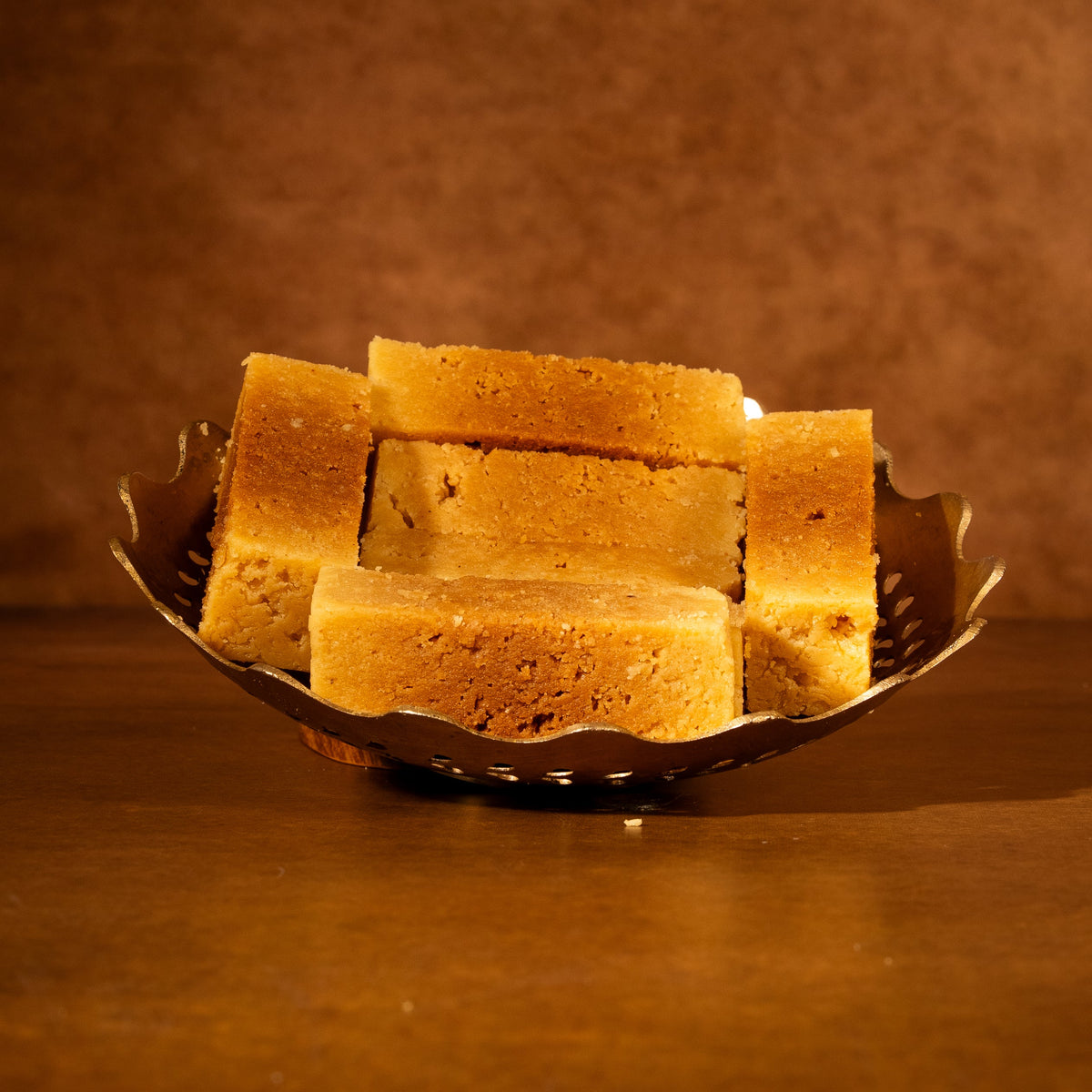
Use the catalogue to identify a manageable shortlist. The banana-chip collection offers a starting point for crunchy snack choices. The murukku collection supports a traditional savoury direction, while the halwa collection helps buyers explore sweet options. These collections support discovery; availability and pack choices must still be checked on the relevant product pages.
A mixed gift can combine textures and flavours without including every category. Think about what each item contributes. A salted crisp, a traditional savoury and a sweet provide distinct roles. Adding several similar spicy products may increase the item count without improving variety. Consider whether recipients will open the gift alone, take it home to share or use it across several tea breaks.
For examples of existing assortments, compare A1 Combo Pack Mini with A1 All in One Combo. Read the listed contents and selectable options carefully. These are product references, not promises that every retail combination can be customised, purchased in any quantity or supplied under the same terms for a business order.
4. Separate assortment size from meaningful variety
The number of items is only one way to describe a gift. Net weight, individual pack sizes, the balance of sweets and savouries, and the number of people likely to share it can be equally important. Ask for an itemised contents list rather than relying on a photograph or a phrase such as “grand selection.” A photograph may show presentation without explaining every variant.
Use a simple comparison sheet with one row per proposed assortment. Record exact product names, quantities of each product, pack sizes, available options and any items still awaiting confirmation. If the supplier offers alternatives, keep them as separate versions until one is approved. This prevents a provisional option from accidentally becoming part of the purchase order.
A1 Chips already has a Mini, Max and Grand comparison guide for retail selection. Business procurement adds another layer: approved quantities, quotation scope, receiving arrangements and an agreement about substitutions. Use both perspectives instead of treating a consumer comparison as a complete business-order specification.
5. Review ingredients without making dietary assumptions
Corporate recipients can have different ingredient preferences and restrictions. Ask the supplier for the current ingredient and allergen information for every proposed item. Use the actual product information and packaging to evaluate suitability. A product name, cooking oil or regional recipe does not establish that a snack is suitable for every dietary requirement.
When a recipient has a specific concern, collect only the information needed to arrange an appropriate option and handle it through the organisation's normal privacy practices. Avoid circulating personal medical details in an open purchase spreadsheet. The supplier needs a clear product requirement, not an unnecessary description of an individual employee's health history.
If suitable alternatives cannot be confirmed, record that before ordering rather than assuming the recipient can simply avoid one component. Mixed assortments may need separate assessment. Keep a reference to the approved ingredient information so the team checking the delivered goods can compare it with what was agreed.
6. Set a budget that covers the actual requirement
Define whether the budget is per recipient, per gift or for the entire programme. Then state what it includes: products, packaging, delivery, applicable taxes and any separately quoted services. Comparing two offers is difficult if one price includes delivery to a single location while the other is a product-only figure. Ask the same cost questions for each option.
Do not infer business discounts from retail prices or assume free-shipping messages apply to the proposed bulk arrangement. Ask for a quotation that identifies the quantity, selected products, delivery scope and validity period. If the budget changes after the shortlist is prepared, revisit the assortment deliberately rather than reducing individual components without approval.
Finance may also need a billing entity, purchase-order reference, invoice address and payment schedule. Provide those details early. The purpose is to remove ambiguity about the agreed order, not to create a complicated process. A concise, complete quotation is more useful than several messages containing different prices and quantities.
7. Agree what happens if an item becomes unavailable
A replacement can change the gift's flavour balance, ingredients, weight and perceived value. Ask whether substitutions are proposed in advance and who must approve them. “Equivalent item” is too vague when the original choice was selected for a particular ingredient preference or occasion. An approved alternative should be described with the same care as the original item.
Document whether the business wants an unchanged assortment, a choice between named alternatives or a revised quotation if availability changes. Also clarify the last point at which a recipient count or flavour option can be changed. These arrangements require confirmation; they should not be assumed from a retail product page.
Keep the final assortment version alongside the quotation. If someone later asks why a particular item was supplied, the purchasing team should be able to identify the approved version without reconstructing the decision from chat messages.
8. Plan receipt and handover as separate steps
The delivery date and the date on which recipients receive their gifts may differ. Allow time for checking the consignment, recording discrepancies and organising the handover. Tell the supplier the required handover date as well as the requested arrival date, then ask what schedule can actually be supported. A preferred date becomes a commitment only when it is confirmed.
Identify the receiving contact, delivery address, access restrictions and hours during which goods can be accepted. An office reception, event venue and warehouse may have different procedures. If gifts go to several offices, give each location a clear allocation and coordinator. Do not assume one courier process will suit every destination.
After receipt, follow the storage instructions on the actual packs. Keep products appropriately stored until distribution and retain packaging information that may be needed for an enquiry. This guide does not assign a common shelf life to different snacks; the relevant dates and storage directions must come from the supplied products.
9. Use a written approval record
Before placing the order, collect the decisions into a single record. It should identify the approved assortment, recipient count, total quantity, budget, delivery scope, billing details, required dates and authorised approver. If some points remain unresolved, list them explicitly. A document labelled “final” should not contain several mutually exclusive product options.
| Decision | What to record | Why it matters |
|---|---|---|
| Assortment | Named products, pack sizes and quantities | Defines what each recipient receives |
| Recipients | Approved count by group and location | Supports allocation and reconciliation |
| Commercial scope | Quoted inclusions and exclusions | Prevents misleading price comparisons |
| Delivery | Confirmed destinations and schedule | Connects procurement with handover |
| Changes | Approver and substitution process | Protects the approved specification |
Where more than one department is involved, decide who owns the final instruction to the supplier. HR may own the recipient list, finance the payment approval and administration the delivery arrangement. One named coordinator can bring those decisions together while each department retains responsibility for its own information.
10. Send an enquiry that invites a useful response
A strong first enquiry contains the organisation name, occasion, approximate quantity, destination, required handover date, budget scope and a short product shortlist. Add ingredient-related requirements and explain which details are flexible. Ask the supplier to confirm available options and the information needed to prepare a quotation.
For example, a buyer could write: “We are comparing sweet-and-savoury assortments for an employee event. Please advise which listed products can be supplied for our proposed quantity, what pack options are available, and the quotation and delivery details you need from us.” Replace general wording with the actual dates and count before sending. This is a planning example, not a statement of A1 Chips' commercial terms.
Use the Corporate Orders page for the business enquiry. Buyers arranging ongoing canteen or hospitality supply can also review the Institution page. Retail resale and distribution are different requirements and should use their respective business enquiry routes rather than being included casually in a gifting request.
Frequently asked questions
Can a retail combo be used as a corporate gift?
A retail combo is a useful starting point for product selection. For a business requirement, confirm the quantity, exact contents, available options, delivery arrangement and quotation with A1 Chips. Do not assume a retail listing establishes customisation, bulk pricing or a particular dispatch schedule.
Should every recipient receive the same products?
That depends on the organisation's purpose and confirmed product requirements. A consistent assortment simplifies allocation, while separately approved alternatives may help address different preferences. Document the quantities of each version and keep the handover instructions clear.
How should we decide how many extra gifts to order?
Use the organisation's expected late additions and distribution plan. There is no fixed reserve percentage that suits every event. Agree a reserve deliberately, record who approved it and check what can be changed before the order is finalised.
Are special packing, discounts or multiple-address deliveries included?
Those details require a specific quotation and confirmation. Include the request in the enquiry and ask which arrangements are available. Avoid treating a desired service as an included service before the supplier has confirmed it.
A final pre-order check
Read the proposed order from the receiving team's point of view. Could that team identify how many gifts belong to each office, which assortment goes to which group and whom to contact about a discrepancy? If the answer depends on someone remembering an earlier conversation, add the missing instruction to the order record. The simplest documentation is often a clear contents sheet and a location allocation table.
Then review it from the supplier's point of view. Has the buyer provided one approved quantity, one current specification and a contact who can answer questions? Remove obsolete versions and label any request that still needs confirmation. This final check protects both sides from avoidable assumptions and gives the organisation a reliable basis for receiving and distributing its gifts.
Make the next decision clear
Corporate snack gifting works best when each step produces a decision that the next team can use: a clear brief, a justified shortlist, an itemised quotation, an approved order and a documented handover. Begin with the occasion and recipient needs, use the catalogue to explore products, and take the commercial questions to the appropriate business enquiry route.
For further selection help, read the existing corporate snack-hamper checklist and the Indian snack gift-box guide. Then submit a focused enquiry with the details needed for A1 Chips to assess the requirement.
Related corporate buying guides
- Employee Snack Gifts: Planning Quantities, Preferences and Distribution
- Client Appreciation Snack Gifts: Building a Useful Selection
- How to Write a Corporate Snack Gift Enquiry
- Comparing Corporate Snack Gift Quotations Without Missing Costs
- Multi-Office Snack Gifting: A Delivery Planning Checklist
- Corporate Gifting Calendars: Plan Snacks Beyond Diwali


Leave a comment
This site is protected by hCaptcha and the hCaptcha Privacy Policy and Terms of Service apply.