
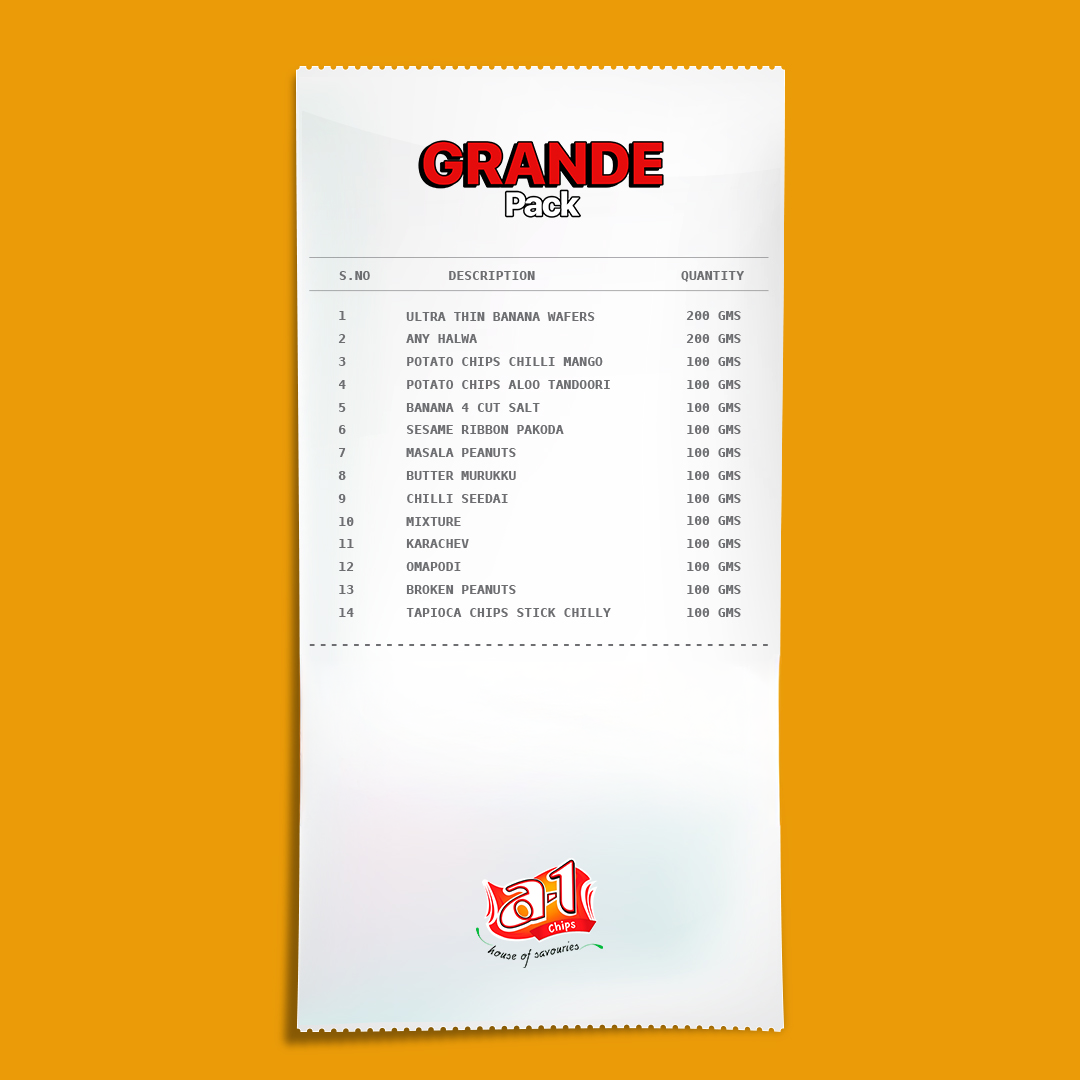
A balanced wholesale snack assortment is a selection with a reason behind each item. It should fit the intended customer or use case, the available display or storage space and the buyer's ability to observe demand. Buying many different products is not the same as building a useful range. The first step is to decide what the assortment must do.
For A1 Chips products, use the current collections to discover categories and the individual product pages to identify exact pack options. Commercial quantities and terms need confirmation through the appropriate business enquiry route. This article explains an assortment-planning method without promising sales rates, margins or supply arrangements.
Name the assortment's job
Describe the setting in one sentence. A neighbourhood shop exploring packaged snacks has a different requirement from an office buying refreshments or an organiser assembling event gifts. The sentence should identify who will choose or consume the products and over what period.
Use that purpose to evaluate every proposed addition. If the buyer cannot explain why an item belongs in the range, it may be better kept as a later test. A clear purpose helps avoid a catalogue-shaped assortment that is broad but difficult to manage.
Start with product families
Create a shortlist of families before choosing individual flavours. Banana chips, tapioca chips, murukku, mixtures and sweets offer different textures and roles. The aim is to see where variety will be useful, not to establish a fixed category ratio that every buyer should follow.
Use A1 Chips' banana-chip, tapioca-chip, murukku, mixture and halwa collections as discovery references. The collections show possible directions; current product availability and pack options must still be checked. A category name does not establish a particular wholesale case size.
Give each item a role
An assortment can contain familiar choices, flavour alternatives and a limited number of exploratory items. Familiar choices provide a clear starting point. Alternatives let the buyer compare different preferences. Exploratory items should have an explicit reason and a way to assess whether they deserve a repeat order.
These roles are planning labels, not verified best-seller rankings. Do not call a product the fastest-moving option without relevant sales evidence. Use observed results from the actual selling or service setting rather than a generic popularity claim.
Compare differences that customers can understand
Useful differences include salted versus seasoned flavours, thin versus thicker cuts, sweet versus savoury choices and distinct traditional snack formats. Several nearly identical items may make the assortment harder to explain without adding much meaningful choice.
For example, compare a named banana-chip product with a murukku or mixture rather than assuming every extra banana flavour broadens the range equally. Read the descriptions and ingredient information before describing those differences. Avoid making health or dietary claims as a shortcut for product positioning.
Keep pack-size decisions visible
A flavour decision and a pack-size decision are separate. A buyer might need the same product in different formats for different uses, but that should be deliberate. Record the exact option beside the product name so quantities and comparisons remain clear.
Do not infer a current pack size from the product URL or an old image. Use the listed option and supplier confirmation. If the proposed commercial arrangement involves outer cases, keep that configuration separate from the size of each individual pack.
Allocate a manageable starting quantity
Base the initial allocation on the intended period, expected demand and available handling capacity. When there is no demand history, label the quantity as an estimate. A trial is useful when the buyer has a plan to learn from it, not simply because the first order is smaller.
Avoid spreading the quantity across so many items that each produces little useful information. A focused starting range can make the next decision easier. The supplier still needs to confirm which quantities and formats can be supplied for the proposed requirement.
Match the range to space and workflow
Check where the products will be displayed, stored and issued. A product that is difficult to identify or access may create avoidable work even if the assortment looks attractive on paper. Staff should be able to find the correct item and recognise its pack option.
Follow the storage directions on the actual supplied packs. Consider the available space before increasing the variety or quantity. Do not use a common shelf-life assumption to justify ordering more of several different product families.
Keep ingredient information attached to the range
Maintain a current reference for the shortlisted products' ingredient and allergen information. This helps staff answer questions accurately and supports a more informed selection process. A familiar product name is not enough to establish suitability for a specific requirement.
If an ingredient question remains unresolved, identify it before final approval. Do not present a category as suitable for everyone or infer suitability from cooking oil alone. Each proposed item should be assessed using its own information.
Decide what will count as useful feedback
For resale, useful observations may include the number of units sold, repeat requests and remaining stock by product. For organisational consumption, the buyer may record what was issued and what remained unopened. For gifts, feedback may concern pack convenience and assortment clarity.
Keep these observations separate from assumptions. A product remaining at the end of a period may reflect visibility, quantity or handling rather than a simple dislike. Record enough context to avoid drawing a stronger conclusion than the evidence supports.
Use an assortment worksheet
A practical worksheet has columns for product family, exact product, pack option, intended role, proposed quantity, demand basis and unresolved questions. Add a field for the person who approved the final range. This connects the selection discussion with the actual purchase specification.
Review the sheet for unnecessary duplication. If several products have the same role, decide whether the distinction matters for the setting. If one category is absent, ask whether that is intentional rather than automatically filling every perceived gap.
Plan changes after the first period
At review time, compare actual results with the starting assumptions. Identify items to retain, reduce, replace or test again. Keep the reason for each change. An assortment should evolve from relevant observations rather than from an urge to refresh every product at once.
Confirm current products and terms for the next enquiry. Previous availability, prices or delivery arrangements should not be treated as permanent. If the change affects case configuration, product information or receiving work, update the specification as well as the quantity.
Separate assortment planning from partnership terms
A shop may have a clear product range in mind while still needing confirmation of the appropriate business relationship. Use Distribution or Authorised Retailer for relevant channel enquiries. A product shortlist does not establish appointment, exclusivity, credit or a territory arrangement.
For office and event consumption, use the Institution route, or Corporate Orders where gifting is the purpose. Describing the operating model clearly helps A1 Chips assess the enquiry without confusing a one-off purchase with an ongoing resale proposal.
Move to an approved shortlist
Before requesting a final quotation, check that every item has a role, every pack option is identified and every quantity has a stated basis. Keep ingredient questions and handling requirements visible. The shortlist should be small enough to compare and clear enough to receive.
Read the wholesale Indian snacks guide, the pack-format comparison and the repeat-order planning guide for the connected decisions. A balanced assortment is one the buyer can explain, operate and improve using actual results, rather than simply a long list of products.
Current product references
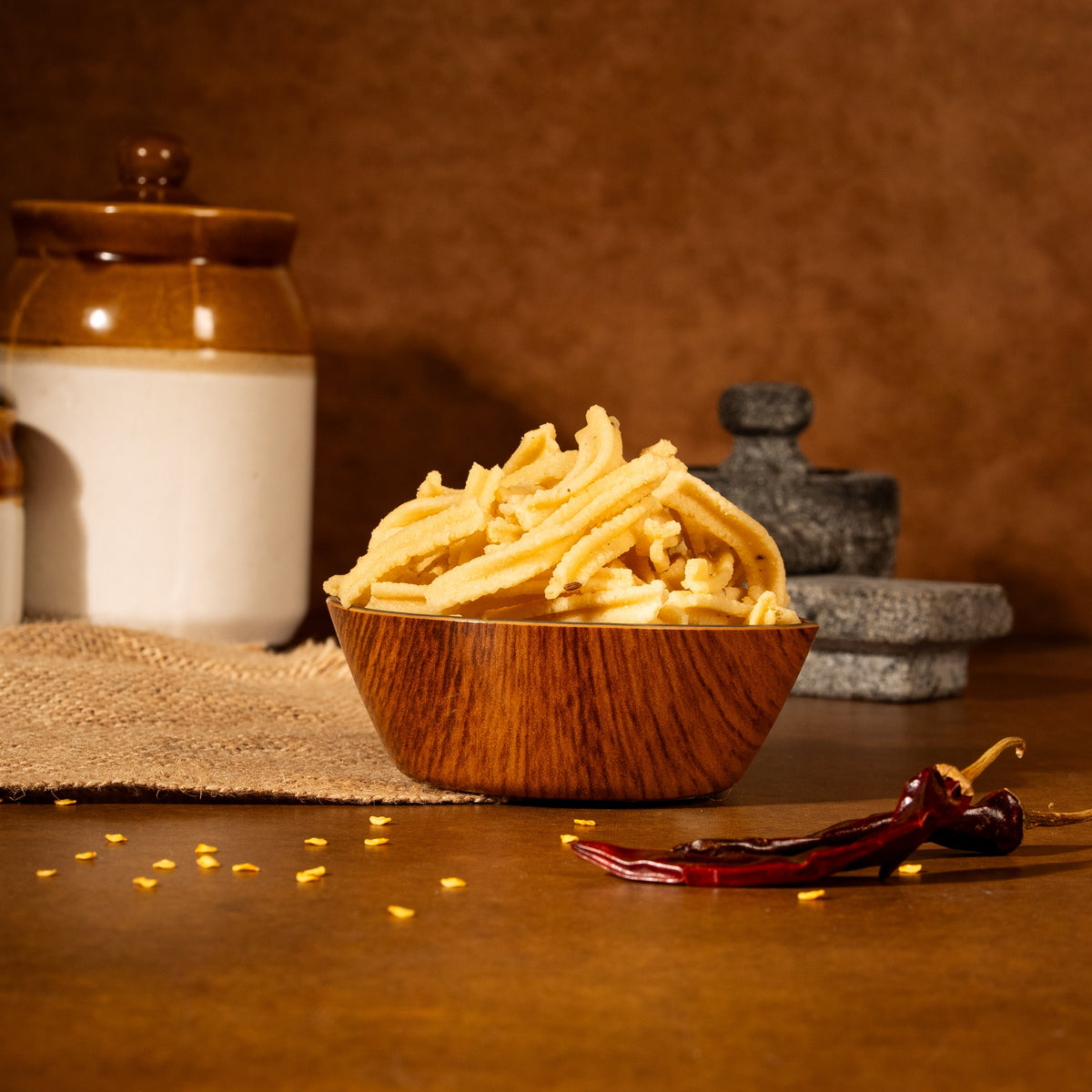
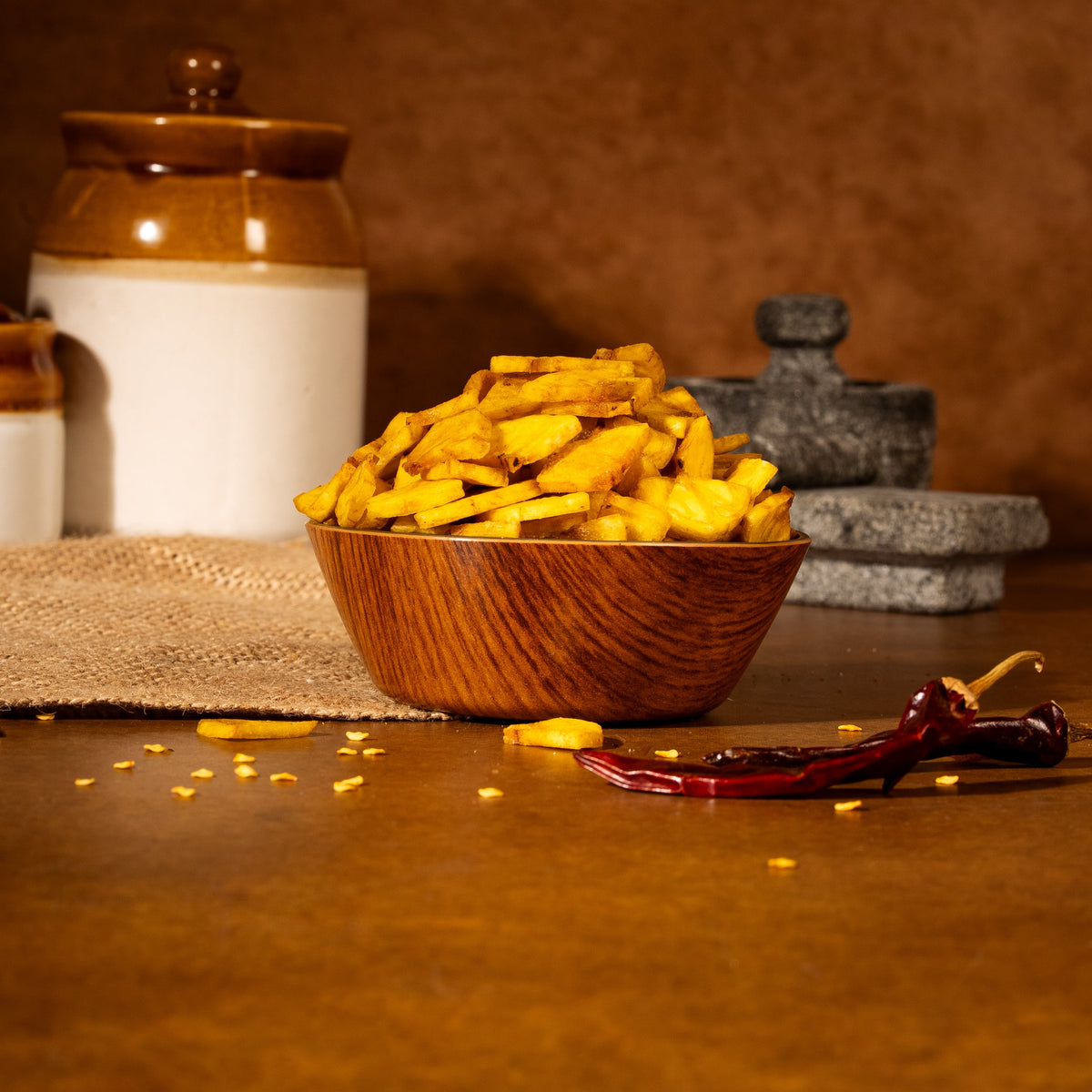
For individual pack research, compare Ultra Thin Banana Wafers and Hand Murukku. Check current product details and options. These catalogue references do not establish a commercial quantity, case configuration or quotation.
Related business buying guides
- Wholesale Indian Snacks: A Practical Bulk-Buying Guide
- Bulk Snack Packs vs Retail Packs: What Buyers Should Compare
- Planning Repeat Bulk Snack Orders Without Overstocking
- Bulk Snacks for Events: Forecasting Portions and Variety
- How to Prepare a Bulk Snack Purchase Specification
- Corporate Snack Gifting Procurement: From Brief to Approved Order

Leave a comment
This site is protected by hCaptcha and the hCaptcha Privacy Policy and Terms of Service apply.