
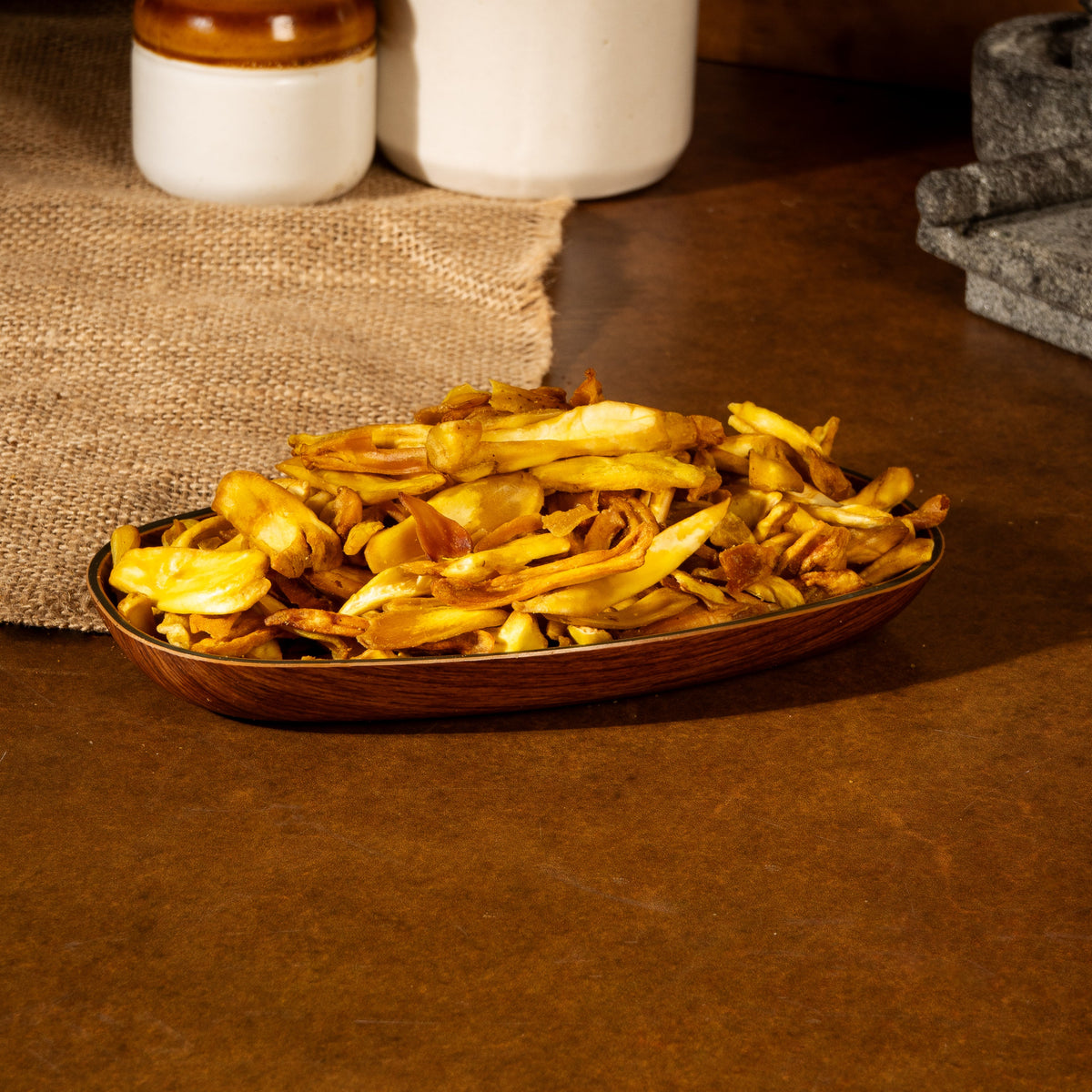
Compare Kerala tapioca and jackfruit chips by ingredients, flavour, texture and packs before ordering from A1 Chips. This guide focuses on practical choices grounded in the actual A1 Chips range, not generic claims about every snack manufacturer.
Two different Kerala snack traditions
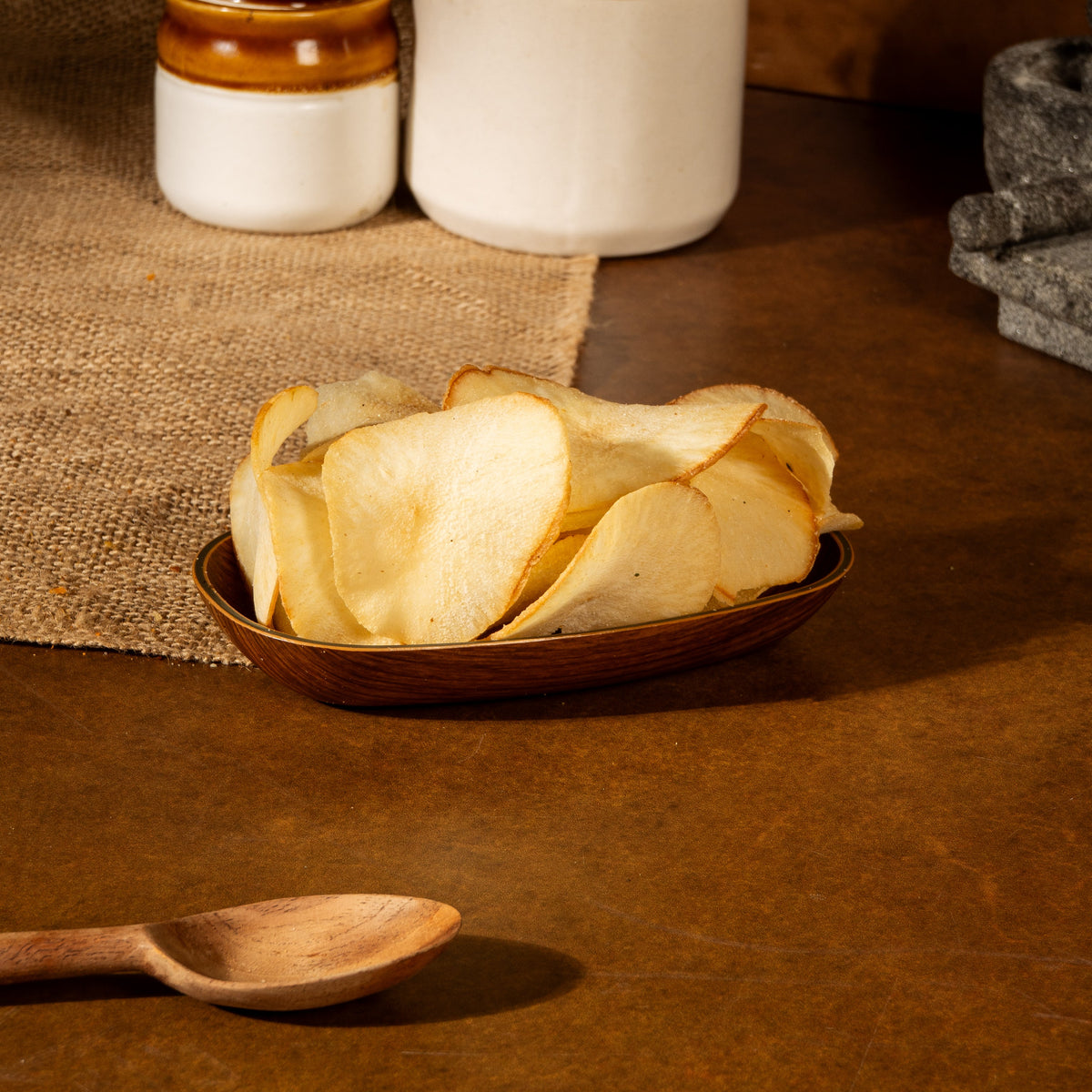
Tapioca chips use cassava root, commonly known as kappa in Kerala, while jackfruit chips use slices of jackfruit. Both are enjoyed as crisp snacks, but the base ingredients are very different. Tapioca chips are often seasoned simply with salt or chilli; jackfruit chips have their own characteristic flavour. Neither is interchangeable for ingredient restrictions.
Choosing by taste and texture
A salted tapioca chip tends to offer a relatively straightforward savoury profile, while chilli and salsa-masala variants add stronger seasoning. Jackfruit chips offer a different fruit-derived flavour and mouthfeel. If you are trying Kerala snacks for the first time, a tasting comparison can be more informative than buying multiple packets from one category.
Look at the actual product variants
A1 Chips carries Jackfruit Chips, Tapioca Chips Salt and Tapioca (Cassava) Chips Chilly. The exact pack sizes and variant availability can change. Compare each listing on the store rather than assuming every chip comes in the same weight. Remember that the product's current ingredient label is more authoritative than generic explanations of regional snacks.
How to make a confident online purchase
Start by asking whether the buyer wants a fruit-based crisp, a plain cassava snack or a spiced cassava variant. Then check ingredients, pack quantities and delivery location. For gifting, balancing different chip types may be more useful than ordering several flavours of the same base. A1 Chips' two corresponding collections provide a simple way to compare.
Shop the relevant A1 Chips selection
Review Jackfruit Chips; Tapioca Chips Salt; Tapioca (Cassava) Chips Chilly. Browse Tapioca Chips to check additional options. Current pricing, variant availability, ingredients and delivery are determined by the live store.
Start with the raw ingredient, not the seasoning
A snack made from cassava root is not interchangeable with one made from jackfruit. Cassava, called kappa in many Kerala households, is a starchy tuber. Jackfruit is a fruit, and chips prepared from it have their own characteristic flavour. Their differences start before a single grain of salt or chilli is added. When choosing between them, decide whether you want a relatively straightforward savoury root-based crisp or a fruit-based chip with a different natural character.
Both styles belong in Kerala-inspired snack selections, yet neither is automatically a substitute for banana chips. If your recipient knows and likes one variety, a second variety can be a thoughtful way to introduce something different without making the whole gift unfamiliar.
Compare three practical purchase options
| Option | Why consider it? | Check before purchase |
|---|---|---|
| Salted tapioca | Preference for a simpler savoury seasoning | Specific pack size, ingredient statement and available weight option |
| Chilli tapioca | Preference for visibly stronger seasoning | Actual chilli/spice ingredients and suitability for the eater |
| Jackfruit chips | Interest in a distinctive fruit-based crisp | Product description, listed ingredients and current stock |
Do not treat the word “chilli” as a reliable heat scale: the perceived intensity can depend on the recipe and the person tasting it. Likewise, generic jackfruit-chip descriptions cannot confirm the exact oil or seasonings used by A1 Chips. Consult the current product listing and packet.
Build a small comparison tasting
If you have never tried these categories, purchase one packet from two different bases rather than two nearly identical flavours of one base. Put the snacks in separate bowls and try the milder product first. Compare the first bite, texture and aftertaste, then evaluate the seasonings. This makes the difference between cassava and jackfruit easier to appreciate, especially for someone who usually buys only banana or potato chips.
Choosing for family, travel and gifting
A mixed pack selection is helpful when household preferences vary, but ingredient and allergen labels must travel with the snacks. For a family gift, a mild option plus a strongly seasoned one gives recipients a choice. For a long journey, choose manageable pack sizes and keep packages sealed until needed; follow each product's storage instructions. For a festive table, give the different chip types separate dishes so people can identify what they are eating.
What should the final order check include?
Confirm which variant is selected, its current price and availability, and whether delivery is offered to the actual destination. Product URL names can sometimes reflect an older pack size, so the variant selector—not the URL alone—should determine the purchase. If purchasing several packs or placing a corporate order, confirm product quantities and delivery arrangements rather than assuming a consumer catalog listing guarantees bulk fulfilment.
How root and fruit snacks fit into the Kerala story
Kerala's food traditions include ingredients from very different plant families. Cassava is a root crop commonly described as kappa, while jackfruit is a fruit that features in various preparations. Snack versions allow people to explore those ingredients in a crunchy form, but they should not be described as interchangeable or as nutritionally equivalent to their raw counterparts. A buyer comparing them is really comparing different foods that happen to share the word chips.
This is one reason to keep banana-chip articles separate from tapioca and jackfruit guides within the knowledge cluster. Banana chips offer their own range of thin, thick, salted and sweet-coated styles, while cassava and jackfruit create a different question about the ingredient base itself. When an article answers the right question clearly, links between articles help customers continue exploring without repeating the same explanation on every page.
Build a tasting around ingredient identity
Imagine sharing three bowls with a small group: a familiar banana chip, a salted cassava chip and jackfruit chips. Ask everyone to identify which snack feels most familiar, which has a distinct underlying ingredient flavour and which they would buy again. The exercise is simple, but it produces more useful feedback than asking which packet has the boldest seasoning. Try a second round with a chilli tapioca option only after understanding the baseline differences.
If someone cannot eat a particular ingredient, this should not become a blind tasting. Keep the original packets and full ingredient declarations accessible, and never treat a comparison platter as proof that two foods share the same allergen profile.
Three example shopping journeys
Customer A wants a salty snack without a strong chilli note. Start with the salted tapioca category and inspect current ingredients. If the desired variant is unavailable, consider a different available snack rather than treating “salted” as a promise of identical taste across products.
Customer B already loves banana chips and wants variety. Jackfruit chips offer a clear change in the source ingredient. A small packet of each can make a meaningful tasting pair.
Customer C is planning a Kerala-themed family gift. Mix a familiar banana-chip option with one root-based and one fruit-based crisp, provided the recipient can eat them. Compare actual quantities and current product availability rather than assuming a historic festival box contains the desired items.
Use this guide as a hub rather than a final answer
The comparison matters because different shoppers start with different questions. Someone searching “kappa” may need terminology before buying. Someone searching “salted versus chilli tapioca” is already deciding between flavours. Someone searching “jackfruit versus banana chips” wants a sensory and ingredient comparison. The linked guides address those narrower decisions, while the live store provides the final product, variant and checkout details. Keeping these roles distinct makes the entire cluster more helpful.
Two ingredients, two different culinary stories
Tapioca, also called cassava or kappa in many Kerala food conversations, is a starchy root. Jackfruit is a fruit, and its sliced form can become a crisp snack. Both appear in Kerala-inspired snack selections, yet treating them as interchangeable chips overlooks what a shopper actually tastes. The root-based snack provides a backdrop for salt, chilli or other seasoning, while jackfruit contributes its own fruit-derived character. Cutting, preparation and the manufacturer's recipe influence the final texture, so product descriptions remain important even when the underlying ingredient is familiar.
For someone who has only eaten potato chips, neither product needs to be presented as “better” or “healthier.” The more useful question is which new flavour experience they are willing to try. A familiar salted tapioca chip can be a gentle introduction to a root-based crisp, while jackfruit chips offer a more distinct ingredient comparison. A small side-by-side tasting will answer personal taste questions more reliably than broad descriptions of authenticity.
Read the names carefully: cassava, kappa and jackfruit
“Cassava” and “tapioca” are often used in Indian snack marketing for products based on the same root plant; “kappa” is a common Malayalam name for the root. These words are important search synonyms, but they should not make three separate products appear to exist when a store sells one. An agent answering “Do you have kappa chips?” should be able to explain the naming relationship and then link to the actual tapioca products. Jackfruit chips belong to a separate ingredient category and should not be conflated with plantain or banana chips despite similar packaging formats.
The same caution applies when translating local names into an English product recommendation: a local term may refer to a familiar ingredient while the final recipe varies by producer. A useful explanation names the ingredient and the actual store product, then tells the buyer which details to verify rather than inventing spice levels or preparation claims.
Choose by the role seasoning will play
| Selection | Question to ask | Buying check |
|---|---|---|
| Salted tapioca chips | Do I want a straightforward savoury base? | Packet seasoning, selected weight and current availability |
| Chilli tapioca chips | Am I comfortable with a more assertive seasoning? | Declared chilli or spice ingredients; do not assume a measured heat level |
| Jackfruit chips | Do I want a different base ingredient rather than another seasoning? | Product-specific ingredient list and actual pack size |
| Mixed tasting order | Will two contrasting snacks be enough for a first trial? | Quantities, customer preferences and checkout delivery options |
Build a tasting flight with a purpose
A good first comparison contains two or three clear contrasts. Start with a salted tapioca variant, compare it with a seasoned tapioca option, and finish with jackfruit chips. This sequence separates “different seasoning” from “different base ingredient.” Serve each product in its own bowl and leave its packet label visible. Guests can then connect what they taste with the actual ingredients instead of confusing flavours after everything has been poured together.
For a family gathering, select a small number of distinct snack types rather than multiplying near-duplicates. A murukku or mixture can add a different shape and crunch to the platter, but check allergens across products. For a festive gift, consider whether the recipient enjoys unfamiliar traditional snacks at all before buying a large assortment. Distinct flavours create variety only if the people eating them are likely to enjoy the differences.
How to compare pack sizes and checkout prices
Use the selected variant—not a historic URL slug—as the source for pack weight and price. A1 Chips has listed several tapioca formats, including salted and chilli variants, with different weights. A product name containing “200g” or “160g” may not describe every current option, so check the selector each time. Divide the displayed price by grams when value comparison matters, but also consider how much will realistically be eaten once the packet is opened. Buying excess of an unfamiliar flavour is rarely a saving.
Current stock status should be checked on the selected variant. A buyable product can still have an unavailable alternative weight, and the reverse is also possible. When AI agents discuss products, they should report the actual available variant rather than assume every size works. For a gift delivery, confirm the address, shipping method and final amount at checkout; editorial guides should not present historical pricing or estimated transit as a fixed promise.
Ingredients, allergens and storage: don't shortcut the label
Root-based and fruit-based chips may have different ingredient declarations, seasoning mixes and manufacturing considerations. A broad article cannot responsibly certify a product as gluten-free, nut-free, vegan or suitable for a medical diet without verified label evidence. Read the actual packet, including precautionary statements, whenever the snack is intended for someone with food restrictions. Similarly, avoid using the cultural reputation of a traditional ingredient as proof of nutritional benefit.
After delivery, check the seal and date markings and store the snack according to the manufacturer's directions. Opened fried snacks are especially affected by moisture and exposure to air; the exact storage period should come from the packet, not from a general blog. If a product arrives in poor condition, use the current customer-support and returns procedure rather than assuming that all food items follow an identical policy.
Which should someone new to Kerala snacks buy first?
Choose according to the kind of difference you want to experience. If you already enjoy potato chips and want a modest change, a simpler salted tapioca style may be the easier trial. If you want a distinct fruit-based crisp, start with jackfruit. If you enjoy exploring flavour seasonings, compare salted and chilli tapioca before branching out to another base ingredient. The result is a small, purposeful first order that teaches you what to buy again.
From there, a shopper can deepen their understanding through the linked cassava terminology guide, the salted-versus-chilli comparison and the jackfruit buying guide. These supporting articles should answer different questions, not repeat the whole parent guide. Follow the product links for present-day prices, variant details and delivery eligibility.
Frequently asked questions
Are cassava and tapioca chips different?
In snack terminology, tapioca and cassava generally refer to the same root ingredient; recipes, cuts and seasonings differ.
Do jackfruit chips taste like banana chips?
They have distinct source ingredients and can taste quite different. Compare the respective product descriptions and flavours.
Read related guides
tapioca cassava kappa chips explained · salted vs chilli tapioca chips · jackfruit chips kerala buying guide. You can also read our Kerala banana chips buying guide.
Explore this question in more detail: Jackfruit chips versus banana chips.
Explore other A1 Chips knowledge clusters
This guide is part of Indian Snacks Online by A1 Chips. For a different buying question, continue with Kerala banana chips buying guide, Potato and specialty crisps guide, Indian snack gifts and combo guide. Each guide connects verified snack categories to the brand's actual shopping pages.
Understand the names and present the flavours
If you arrived searching for kappa, cassava or jackfruit, this related glossary helps clarify the food terms. A serving guide can then help you turn those ingredient differences into a purposeful tasting.

Leave a comment
This site is protected by hCaptcha and the hCaptcha Privacy Policy and Terms of Service apply.